Why This Training Matters Now
Organizations across schools, healthcare, offices, retail, and houses of worship increasingly require active shooter response security training that is practical, trauma-informed, and measurable. This training goes beyond a slide deck: it aligns policies, floor plans, drills, and communications so staff know how to act under stress. Federal guidance emphasizes simple, memorable actions—often summarized as “Run, Hide, Fight”—and pairing them with site-specific planning and exercises.
Recent data underscores the importance of preparedness. The FBI’s 2024 report recorded 24 active shooter incidents nationwide—a 50% decrease from 2023 but still a complex, multi-venue threat that spans commerce, education, government, open spaces, and houses of worship.
What “Good” Training Looks Like
Plain-Language Protocols Everyone Remembers
Effective active shooter response security training converts policy into reflex. We teach staff to:
- Run: Move away from danger, leave belongings, and choose exits quickly when safe.
- Hide: Lock or barricade, silence devices, cover and conceal.
- Fight: As a last resort, disrupt and disable the attacker with coordinated action.
Ready.gov’s hazard sheet captures these principles succinctly.
Site-Specific Pre-Plans
Generic advice breaks down during real events. We walk your property and mark hard cover, lockable rooms, line-of-sight risks, PA reach, and first-aid/bleed-control locations. Then we map routes and rally points that align with daily operations (shift changes, school bell times, visitor flows, delivery docks).
Roles, Radios, and Redundancy
During an incident, a single missed handoff can add minutes. We define who calls 9-1-1, who manages door controls, who directs building announcements, and who meets first responders with floor plans and camera access. We also test redundant comms—text groups, radios, and offline procedures if networks fail.
Build the Muscle Memory
Table-Tops → Walkthroughs → Full Drills
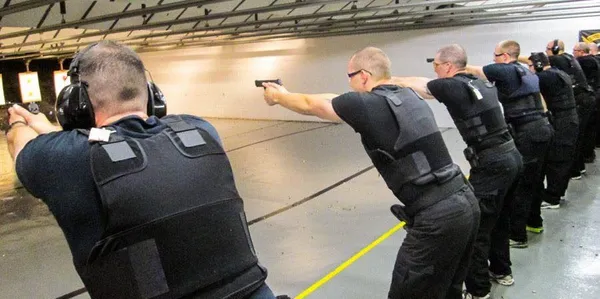
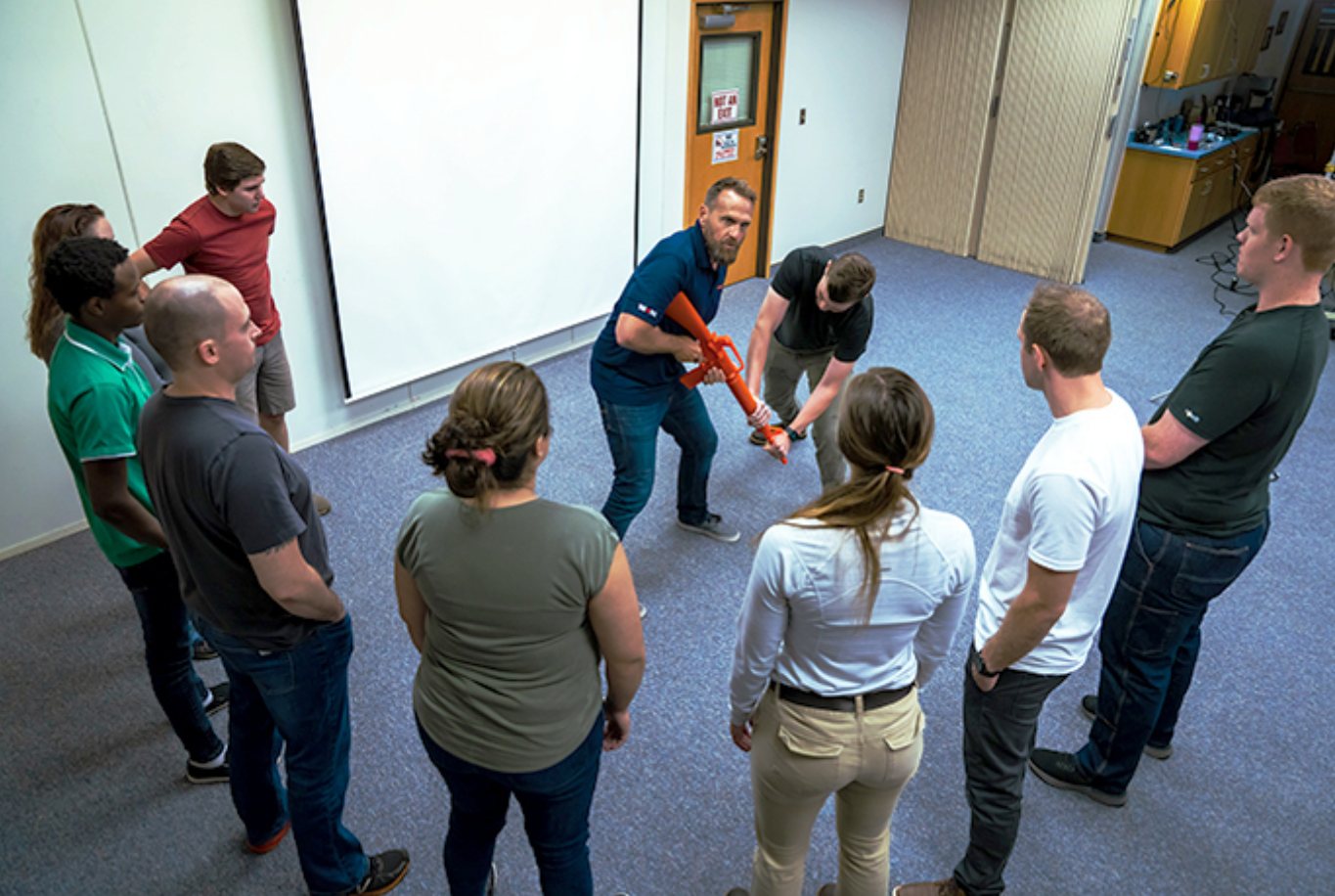
We start with 10-minute table-tops by shift, move to silent walkthroughs, then scenario drills with controlled stressors. Drills are trauma-aware and coordinated with local police/EMS.
Teach What to Expect from Police
We prepare your teams for the moment responders enter: hands visible, follow commands, keep information short and specific (suspect description, last direction of travel, injured locations). The CISA Active Shooter Preparedness Action Guide offers concise checklists for response and recovery phases you can adapt to your facility.
Integrate Medical and Post-Incident Care
Stop the Bleed Skills
Adding bleeding-control kits and basic MARCH principles (Massive hemorrhage, Airway, Respiration, Circulation, Hypothermia) saves lives. We fold these into drills so staff can act between the first 9-1-1 call and responder arrival.
Recovery and Return-to-Service
After stabilization, we help you execute your Emergency Action Plan (EAP) steps and recovery communications. OSHA reminds employers that well-developed EAPs plus training reduce injuries and damages during any emergency.
Documentation That Stands Up
Evidence-Ready Records
Every exercise produces a short report: roster, timestamps, radio checks, door status, and lessons learned. We track closure of corrective actions (locks, signage, PA audibility, camera angles) and keep a ready-to-share packet for insurance, regulators, or boards.
KPIs You Can Defend
- Alert-to-Announcement (sec)
- Drill Evacuation/Hold-in-Place Times (min)
- Door/Lock Audit Pass Rate (%)
- First-Aid Kit & Bleed-Control Coverage (per floor)
- Corrective Actions Closed (trend)
The FBI’s annual report gives a baseline for context when communicating with leadership about risk and ROI.
Industry-Aligned, California-Ready
Policy Alignment and Worker Safety
While OSHA has no specific standard titled “active shooter,” its workplace-violence resources and enforcement guidance reinforce the value of assessments, training, and EAPs integrated with your broader safety program.
De-Escalation Culture
We emphasize dignified contact and early reporting—because most safety wins happen before the crisis. That includes threat-assessment pathways, respectful visitor screening, and “see something, say something” workflows that aren’t punitive.
Connect the Dots
If your environment includes classrooms or campuses, pair this program with our Security for Schools San Diego guidance for layered prevention, drills, and on-scene coordination. This internal resource complements active shooter response security training by addressing daily access control, visitor management, and campus-specific drills already in your ecosystem.
Why City Wide Protection Services
- Proven Readiness — We protect 350+ properties, have executed 65,000+ responses since 2016, and documented 30+ life-saving interventions since 2020.
- Integrated Program — Policy development, floor-plan marking, staff training, live monitoring integration, and evidence-ready reporting—under one partner.
- Community-First — Trauma-aware drills and de-escalation practices that build confidence without creating fear.
Train With Pros. Be Ready on Any Shift.
Let’s design and deliver active shooter response security training tailored to your floor plans, schedules, and staff.
Call us: 888-205-4242
Email: [email protected]
We’ll map risks, train teams, run drills, and track KPIs—so your people know what to do and your leadership can prove readiness.