Why “Partnership” Beats “Patrol Only”
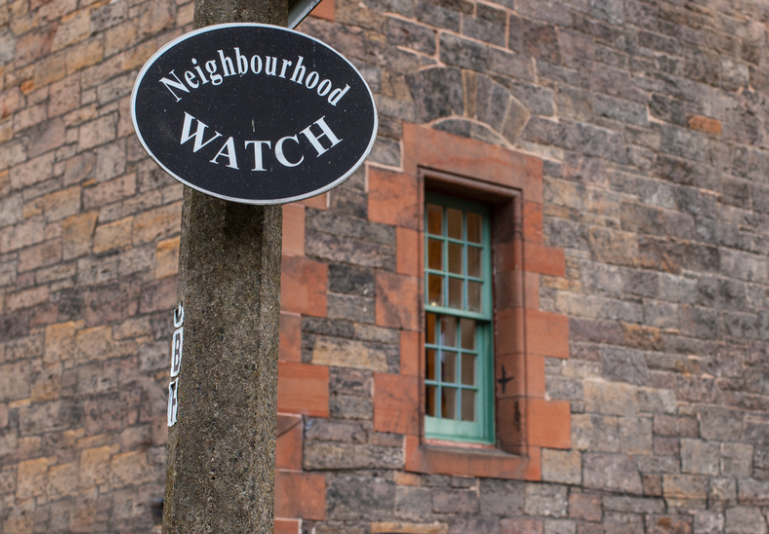
Neighborhoods change character after business hours. Foot traffic dips, sightlines shrink, and small suspicious cues become easier to miss. That’s why neighborhood watch partnership security services work best when professional officers and resident volunteers operate as a single system: neighbors observe and report; trained dispatchers verify; mobile units respond fast; and the whole loop is measured and improved monthly. This is community policing in practice—linking law enforcement, private security, and residents around shared information and repeatable playbooks. The National Neighborhood Watch (run by the National Sheriffs’ Association) has long emphasized this model, providing training and resources for agencies and communities to collaborate effectively. Read more there: National Neighborhood Watch
Evidence That Watch–Security Partnerships Reduce Crime
Independent research has repeatedly found that structured neighborhood watch programs are associated with meaningful crime reduction when they’re well organized and integrated with official responders. A Campbell Collaboration meta-analysis reported 16–26% reductions in crime across evaluated schemes—encouraging proof that coordinated eyes-and-ears matter when they feed into a professional response pipeline. You can review the summary here.
Beyond the numbers, modern law-enforcement guidance stresses partnerships as a core public-safety tool, noting how roles have expanded and collaboration has become essential to problem-solving.
What “Neighborhood Watch Partnership Security Services” Includes
A. Resident Activation (Simple, Safe, Structured)
We help HOA boards, property managers, and block captains formalize a watch: recruit, register, and train volunteers on what to notice, how to describe it, and when to escalate. The official Neighborhood Watch manuals provide practical templates for roles, meeting cadence, and reporting checklists—useful starting points we tailor to your block or building.
B. Verification Before Dispatch
Residents report tips through an app, text, or hotline. Our operations center correlates the report with live cameras, access-control events, and recent incident logs. A verified event triggers a clear script (voice-down if speakers exist; patrol dispatch if not). A non-verified tip still becomes a tagged patrol check and an entry in your trend report.
C. Directed Patrols—Not Aimless Loops
Traditional loop patrols are easy to predict. We use neighborhood heat maps to send officers to must-hit checkpoints—back lanes, stair cores, parking approaches, mailbox clusters, and trash enclosures—when they’re most at risk. Patrol timing aligns to your neighborhood’s patterns: school release, shift changes, delivery windows, and weekend peaks.
D. Communication That Builds Trust
Command staff publish short monthly snapshots: what was reported, what was verified, what changed (lighting angles, camera re-aims), and what to watch this month. This keeps residents engaged and improves reporting quality over time—exactly what the community-policing literature recommends.
How We Stand Up a Watch–Security Program in 30 Days
1) Listen & Map
We walk the property with community liaisons to locate blind spots, choke points, poor lighting, and repeat-call micro-zones. We capture resident concerns and any existing informal routines. The output is a one-page neighborhood risk map.
2) Recruit & Train
We create short sign-up flows and a 60-minute onboarding covering: what to report (and what not to), safety basics, description drills (people, vehicles), and the escalation tree. National resources give us a solid baseline that we customize for your local rules and privacy expectations.
3) Connect the Tech
We integrate tip channels with our SOC console and—where available—tie in camera tiles, gate/access data, and license-plate snapshots. Now, a resident’s report can pull the right camera view instantly and drive a directed patrol instead of a blind loop.
4) Run Micro-Drills
In 10-minute “coffee drills,” we practice three common scenarios: suspicious vehicle lingering, package theft attempt, and after-hours door prop. Each drill produces a short AAR (after-action review) to close small gaps fast.
5) Report, Adjust, Repeat
We share KPIs leaders care about:
- Alert-to-Verify (seconds)
- Verify-to-Dispatch (seconds)
- On-Scene Arrival (minutes)
- False-Alert Reduction (trend)
- Repeat-Cause Fixes Closed (lighting, signage, door timers)
Partnerships thrive when everyone sees progress and next steps, a theme echoed in federal best-practice guidance.
Use Cases Where Partnerships Shine
Multifamily Communities
Residents notice patterns—unfamiliar vehicles cycling past garages, door-to-door solicitors at odd hours. With neighborhood watch partnership security services, those observations become verified events, officer intercepts, and camera clips attached to a usable case file.
Townhomes & HOAs
Mail-theft and vandalism hot spots respond well to small environmental tweaks (motion lighting, sign placement) plus must-hit patrol checkpoints during the right 90-minute windows. Policy and practice from Neighborhood Watch manuals translate neatly here.
Urban Mixed-Use Blocks
Retail closes before residents sleep. The watch reports loitering near service corridors; our SOC verifies via cameras; patrol arrives on the quicker of two routes we’ve mapped in advance. The monthly report then justifies a light re-aim or a sign relocation—low-cost changes with visible impact.
Resident Safety, Privacy, and Respect
A healthy watch avoids vigilantism. Volunteers observe and report; professionals verify and respond. Training emphasizes respectful language, non-confrontation, and inclusive meetings. Federal outreach materials consistently frame partnerships in these terms—relationship-building as much as crime-fighting.
Connect the Dots
Pair this with our San Diego Residential Security Services program to add 24/7 mobile coverage, vacation checks, and evidence-ready incident reporting that folds seamlessly into your neighborhood watch partnership security services plan.
Why Choose City Wide Protection Services
- Proven Scale — We protect 350+ properties, have logged 2.5M+ reports since 2013, and completed 65,000+ responses since 2016 with 30+ documented life-saves since 2020.
- Integration-First — Watch tips flow into a modern SOC that ties cameras, access, and patrol together—verification before dispatch, every time.
- Community-Centered — We guide meetings, publish readable snapshots, and keep the partnership welcoming and safe for all neighbors.
Start a Safer Block—This Month
Let’s stand up neighborhood watch partnership security services that fit your streets, your schedules, and your residents.
Call us: 888-205-4242
Email: [email protected]
We’ll recruit, train, integrate, and report—so your neighborhood gains a round-the-clock safety network with measurable results.