Start with risk, not gear
Executive teams often ask whether they should deploy armed, semi-armed, or unarmed officers. The honest answer: it depends on your risk profile, operating hours, public exposure, and tolerance for liability. Choosing between armed, semi-armed and unarmed security guards is an operational design question—one that should be driven by a structured risk assessment and by local compliance requirements, not just instinct. Federal guidance on risk management for facilities recommends selecting protective measures that are commensurate with threat likelihood and consequence—exactly the mindset you need before deciding on posture.
What each posture actually means
Unarmed officers: presence, prevention, and procedures
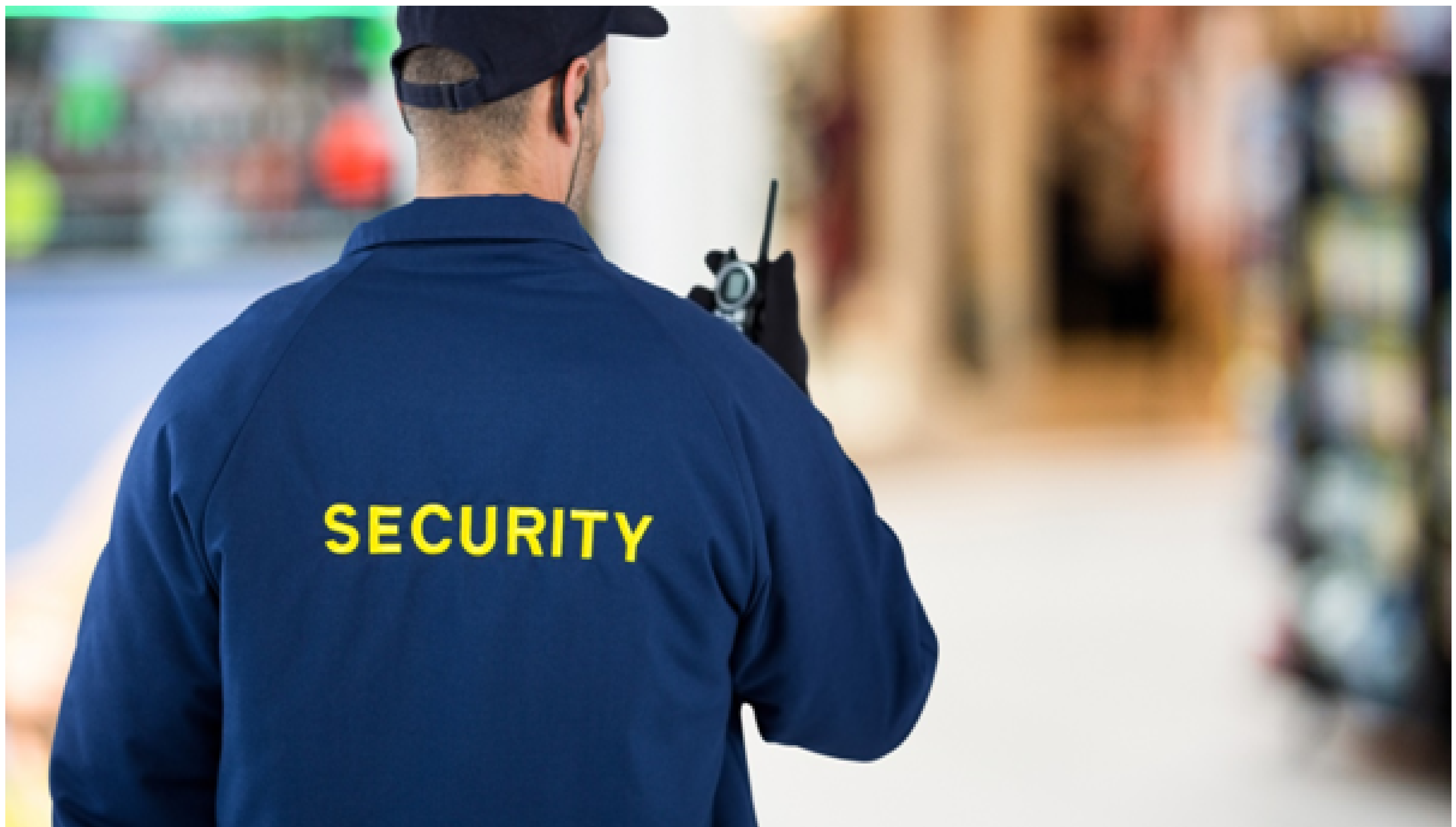
Unarmed officers focus on deterrence, observation, customer service, policy enforcement (badging/escorts), incident reporting, and rapid escalation to patrol or law enforcement. In California, guards must complete Power to Arrest & Appropriate Use of Force training and additional hours within set timelines—baseline competence that supports most low-to-moderate risk environments.
Where they shine: corporate campuses, residential communities, retail/mixed-use common areas, lobby posts, event guest management, and locations with strong engineering controls (access, lighting, cameras).
Key advantages: lowest liability profile, approachable customer experience, excellent for prevention + policy compliance.
Semi-armed officers: an intermediate deterrent
Semi-armed officers carry intermediate defensive tools (e.g., baton or OC spray where permitted) and receive additional certifications. They provide stronger deterrence and more options for self-defense without the elevated exposure that comes with firearms carriage. (Permits for specific tools are governed by state rules and agency policy; ensure your program documents tool authorization, storage, and training.)
Where they shine: parking structures, large residential footprints with known nuisance activity, late-evening retail perimeters, and properties where response times require officers to stabilize scenes safely while patrol is en route.
Key advantages: higher deterrence than unarmed, smaller liability envelope than armed, good fit when verified threats are episodic but non-negligible.
Armed officers: high-risk, time-critical environments
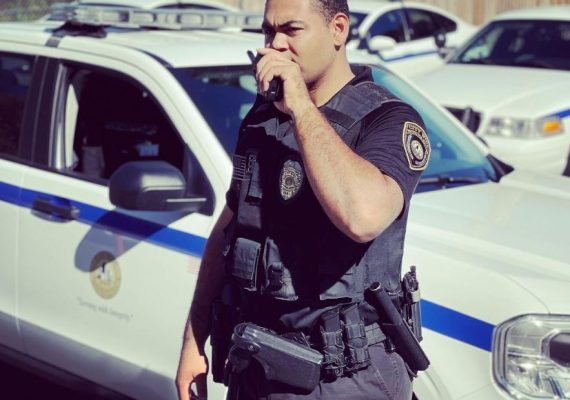
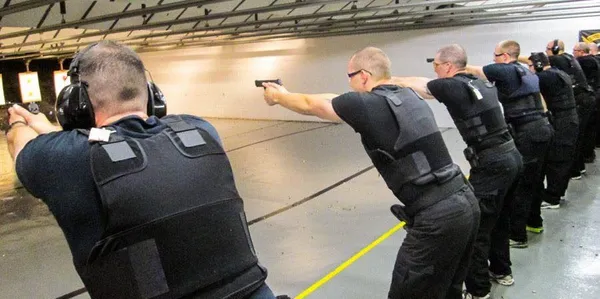
Armed officers are suitable when credible threats include armed robbery, targeted violence, or critical infrastructure concerns—and when a faster on-scene armed response measurably changes outcomes. In California, an exposed firearm permit is required for on-duty carriage, and since 2018, applicants associating a firearms permit to a guard registration must complete an assessment demonstrating judgment, restraint, and self-control. These requirements underscore the seriousness of armed deployments.
Where they shine: high-value logistics, cash handling, critical energy/utility sites, sensitive healthcare or pharma storage, and properties with documented violent incidents.
Key advantages: strongest deterrence, capability against severe threats, may reduce time-to-stabilize in acute scenarios.
A simple decision framework (use this before you post a guard)
1) Profile the risk by time and place
Map threats across operating hours: daytime customer flow, evening close, overnight. Identify consequence (people, brand, continuity) and likelihood (history, geography, nearby crime patterns). CISA/ISC risk processes explicitly recommend aligning measures to these two axes—foundation for selecting armed, semi-armed, or unarmed.
2) Engineer first, staff second
Before upgrading posture, close gaps with access control, lighting, and video verification. OSHA’s workplace-violence guidance for late-night operations reinforces environmental controls (visibility, cash-handling limits, barrier placement) that often reduce the need for heavier postures.
3) Pick the posture that matches the scenario
- Unarmed for policy-heavy, public-facing spaces with good engineering controls.
- Semi-armed where nuisance risk is persistent and officers may need intermediate tools for safe disengagement.
- Armed where credible, documented violent threats exist—and where your program can support enhanced vetting, training, audits, and reporting.
4) Write short playbooks
For each posture, publish a two-page run-book: trigger → first 5 minutes (verify, voice-down, lockouts) → 60-minute stabilization → evidence capture → notifications. Train to these playbooks per shift.
5) Prove it with KPIs
Track: Alert-to-Verify (sec), Verify-to-Dispatch (sec), On-Scene Arrival (min), False-Alert Reduction (trend), and Repeat-Cause Fixes. Up-posture only if these metrics—and your incident mix—justify it.
Compliance & training realities you can’t ignore (California focus)
- Guard card & training: California BSIS requires Power to Arrest/Appropriate Use of Force plus additional hours within six months of initial registration. Keep certificates on file and verify vendor approvals.
- Firearms permit: Armed guards must hold an exposed firearm permit; the permit must match the license type under which the armed work is performed (no “carryover” authority).
- Judgment assessment: To associate a firearms permit to a guard registration, candidates must pass a state-mandated assessment demonstrating appropriate judgment and restraint.
Want to dive deeper into the risk-to-measure mapping that supports posture selection? CISA’s Risk Management Process provides a widely used, five-step federal standard.
Cost, liability, and public experience
- Cost: Armed deployments are more expensive due to training, insurance, and selection standards; semi-armed sits in the middle; unarmed is typically most economical.
- Liability: Weapon carriage increases exposure and documentation burden (qualification logs, audits, incident reviews). If your threat picture doesn’t justify it, resist “defaulting” to armed.
- Customer experience: Unarmed often delivers the most welcoming vibe for lobbies and retail; semi-armed balances deterrence with approachability; armed should be purpose-driven and visibly professional.
Real-world pairings that work
- Corporate campus, daytime + events: Unarmed at lobbies; semi-armed for evening garage patrols when incidents historically occur.
- Multifamily with theft/trespass trend: Semi-armed directed patrols at parking and mail areas; unarmed for concierge/amenities; armed only if verified violent incidents escalate.
- High-risk logistics or critical energy site: Armed officers at choke points with video-verified alarms; semi-armed rovers for perimeter; unarmed for visitor flow in low-risk windows.
Connect the dots
If you’re leaning toward roving coverage, our San Diego Mobile Security Patrols guide explains route design, must-hit checkpoints, and proof-of-presence reporting that pairs perfectly with your chosen posture.
Let CWPS tailor the posture to your property
We’ll run a quick risk review, sanity-check compliance, and design the playbooks and KPIs to back your choice—whether armed, semi-armed, or unarmed.
Call us: 888-205-4242
Email: [email protected]