Getting the best security guard post orders for multifamily communities right is the difference between a calm, predictable living environment and a property that constantly feels reactive. The ideal post orders are short, scenario-based, and measurable; they should guide officers to be visible, courteous, and effective—while giving managers the reporting trail they need for enforcement, insurance, and board review.
Why post orders are a living playbook—not a binder on a shelf
Post orders translate your security strategy into what an officer actually does at 2 a.m. in the garage or 5 p.m. near the mailroom. The best versions are:
- Layered: They tie together access control, patrol routes, live camera monitoring, and resident communication.
- Scenario-based: They include simple decision trees (“If X, then Y”) for trespass advisals, door-prop alarms, and noise complaints.
- Measurable: They define KPIs like arrival times, false-alarm reduction, and closure quality (photos, video stills, timestamps, actions).
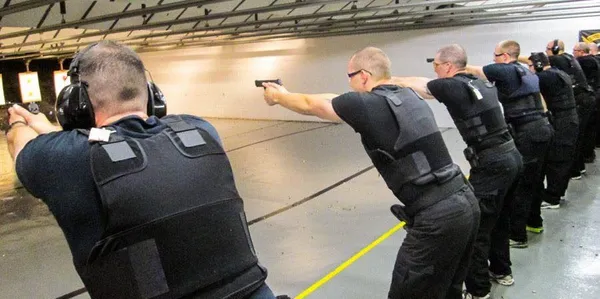
- Trainable: They’re short, printable/phone-friendly, and rehearsed with micro-drills so policy becomes muscle memory.
External guidance aligns with this approach. HUD’s long-standing security planning framework for multifamily emphasizes management’s role, layered design, and clear allocation of responsibilities—useful anchors when you structure post orders.
The core sections every multifamily post order should include
1) Site overview and officer posture
Summarize the property (buildings, amenities, entries, parking types) and officer posture (unarmed, semi-armed, or armed). Clarify uniform standards, body-worn camera policy (if used), and customer-service ethos: de-escalation first, hospitality always.
2) Directed patrol routes and timing
Set must-hit checkpoints for patrols—mailrooms, elevators, stairwells, gyms, pool gates, garages, and side alleys. Tune routes by time of day (parcel peaks 5–9 p.m., garages 10 p.m.–2 a.m., perimeter 2–5 a.m.) and specify proof-of-presence (QR/NFC scans, photo notes). Tie this to a Service Level Objective (SLO): e.g., “All checkpoints covered every 90 minutes, with two garage sweeps between midnight and 3 a.m.”
3) Alarm verification and rapid response
Require camera/SOC verification before dispatch when possible. Script the flow: alert → verify (video/audio talk-down) → dispatch → on-scene → document. This reduces false alarms and channels resources to real problems fast.
4) Resident-facing service and rule support
Spell out parking reinforcement, quiet hours, amenity checks, and respectful trespass advisals. Officers should know the escalation ladder (verbal notice → written note → management) and always document courteously.
5) Incident categories and decision trees
Short decision trees beat long paragraphs. Example snippets:
- Door-prop at pedestrian gate → Close → inspect for damage → note time/camera angle → second check in 30 min → advise management if repeat within 24 hours.
- Noise complaint (unit) → Verify from corridor → courtesy knock → note unit/time → escalate per HOA policy if continued.
- Garage loitering → Observe → audio talk-down (if available) → approach with partner when possible → trespass advisal per policy → document with photo still.
6) Evidence and reporting standards
Define what a finished report looks like: who/what/where/when, actions taken, and attachments (image stills, checkpoint scans, video clip IDs). This is essential for hearings, rule enforcement, and police collaboration.
7) Safety, emergencies, and mutual-aid contacts
List fire panel basics, medical response steps, local non-emergency numbers, tow policy, elevator vendor, after-hours maintenance, and utilities. Keep it one page and updated quarterly.
Train the orders: brief drills beat long lectures
Run 10-minute table-top drills at shift change twice a week: a prop-alarm at a side gate, a delivery surge blocking the entrance, a pool after hours, a garage loitering call. Rehearsal builds confidence. For a broader environmental lens, CPTED principles (sightlines, territorial reinforcement, natural access control) are practical tools your landscape and maintenance teams can implement alongside security read more there: REMS
Data to include—and why it matters to boards
Boards and asset managers want proof that security is working. Your post orders should line up with a monthly one-pager of KPIs:
- Alert-to-Verify (sec) and Verify-to-Dispatch (sec)
- On-Scene Arrival (min) by time window
- False-alert reduction (%) via verification/analytics
- Top three repeat causes and the fix status (e.g., door closer replaced, light repaired, sign added)
Sample outline: the best security guard post orders for multifamily communities
- Mission & Tone (¼ page)
Warm, service-forward, de-escalation first. Residents and guests should feel welcome, not policed. - Site Snapshot (½ page)
Maps of entries, amenities, garages; officer posture; emergency contacts. - Access Rules (½ page)
Visitor code etiquette, vendor validation, tailgating procedure, ALPR notes (if used). - Patrol Matrix (1 page)
Must-hit checkpoints by time window; proof-of-presence method; supervisor spot-checks. - Alarm & Dispatch (½ page)
SOC verification steps, audio talk-down scripts, dispatch threshold, arrival SLOs. - Incident Trees (1–2 pages)
Door-prop, noise, trespass, vandalism, parking, medical assist, after-hours amenity. - Evidence & Reporting (½ page)
Photo/video standard, timestamps, narratives; where to upload; retention. - Safety & Emergency (½ page)
Fire panel basics, medical handoff, tow workflow, vendor call list. - Training & Audits (½ page)
Weekly micro-drills, monthly KPI review, quarterly post-order refresh.
If you’re formalizing post orders, pair them with a broader approach to Apartments & Condominium Security that covers layered tech, resident engagement, and enforcement pathways.
Pro tips to keep orders effective all year
- Keep it short. If a section can’t be read on a phone in 30 seconds, trim it.
- Version control. Date every update; archive old PDFs; train on changes.
- Make it visible. A laminated 2-page quick-reference in the patrol bag + digital copy in the app.
- Close the loop. If a root cause repeats (a propped door, a dark corner), your orders should assign the fix and track it to completion.
- Engage residents. Tie post orders to a one-page “How Security Works Here” for residents—parking norms, guest codes, reporting channel.
Bonus resource for managers: BOMA’s life-safety and emergency preparedness hub provides templates and checklists you can adapt.
Ready to write or refresh your post orders?
We build concise, scenario-based post orders for multifamily portfolios and train officers to them—so your community feels safe, friendly, and predictable.
Call us: (888) 205-4242
Email: [email protected]