Launching a career in private security starts with the right foundation—and in California, that foundation is the BSIS guard card. If you’re searching for BSIS guard card training San Diego, this guide walks you through what the license is, the exact training hours you need, how the Live Scan process works, and how to choose a compliant local program that positions you for real-world success.
Why the Guard Card Matters
California regulates security guards through the Bureau of Security and Investigative Services (BSIS). To work legally, you must be registered with BSIS and complete state-mandated coursework. That licensing isn’t just a box to tick—it sets the baseline for safe, lawful, and professional security work on commercial, residential, and public sites across San Diego County.
What Training Is Required (Hours & Timeline)
California requires an initial training block followed by additional coursework and annual refreshers:
- Initial (first 30 days): at least 16 hours
- Within 6 months of registration: an additional 16 hours (total 32 hours in the first 6 months)
- Annually thereafter: 8 hours of continuing education
These timelines and hour requirements come directly from BSIS documentation, including the current Security Guard Application and training outlines. For details, you can review the official BSIS pages and PDFs for the latest instructions and forms.
Core Modules You’ll See
Most compliant programs will cover the BSIS-approved curriculum, which typically includes:
- Powers to Arrest (legal authority, detention, liability, report writing)
- De-Escalation and proper Use of Force
- Public relations and communication
- Observation and documentation skills
- Emergency response, scene safety, and coordination with law enforcement
You can review the BSIS “Power to Arrest” training manual to understand the scope and expectations for this core module.
Step-by-Step: How to Get Your Guard Card
1) Complete Your Initial Training
Choose a BSIS-compliant provider that delivers the required curriculum in the correct time windows (16 hours within 30 days; 32 hours within 6 months). Some providers offer flexible in-person and online options—just confirm they align with BSIS rules for each topic (certain modules may require traditional classroom instruction).
2) Do Your Live Scan (Background Check)
California requires Live Scan fingerprinting. Your training provider may guide you, but you’ll ultimately submit fingerprints via an authorized Live Scan location so BSIS and the Department of Justice can process your background check. The BSIS site lists the forms and steps you need.
3) Apply to BSIS
Submit your Security Guard Registration application (online or by mail) with the required fees and documentation. The most up-to-date application PDF (which also summarizes training hours) is hosted on the BSIS website.
4) Finish the Remaining Hours (Within 6 Months)
After initial onboarding, complete the remaining hours to hit the full 32 within six months. Keep copies of your certificates—employers and BSIS can request proof at any time.
5) Annual Continuing Education (8 Hours)
To maintain your registration, complete 8 hours of training every year. Many local academies offer bundled refreshers aligned with BSIS guidance.
Choosing the Right San Diego Program
Verify BSIS Alignment
Before you enroll, confirm the program’s curriculum maps to BSIS’s official training manual and application guidance, including delivery method (some content may require classroom-based instruction). Ask for a syllabus and sample certificate templates.
Prioritize Real-World Readiness
Beyond compliance, the best San Diego programs simulate real posts: commercial properties, gated communities, construction sites, and event venues. Look for instructors who bring field experience and who assess scenario judgment, not just multiple-choice answers.
Plan Your Career Path (Armed, Unarmed, K-9, SOC)
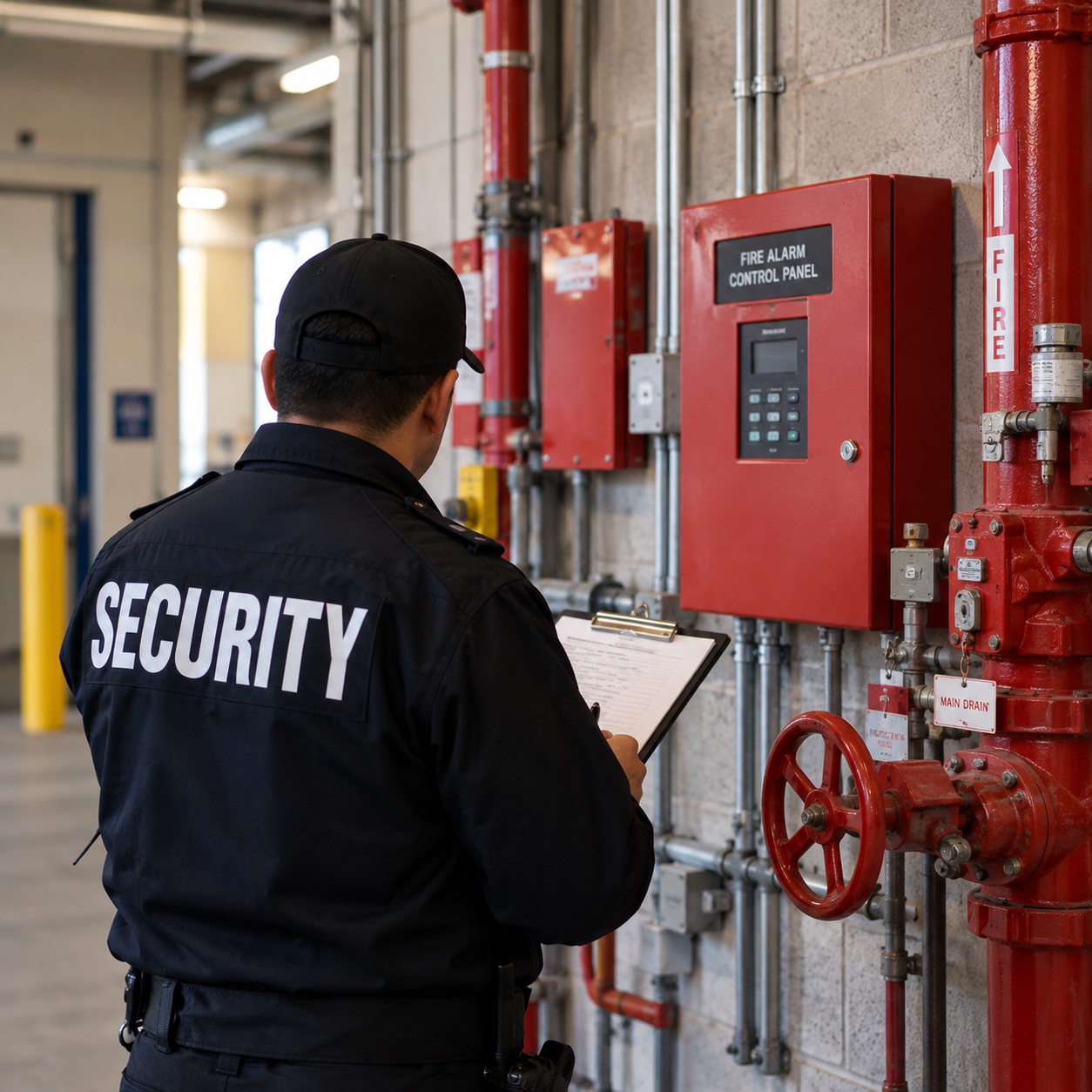
If you aim to progress—into fire watch, mobile patrol, K-9 support, or a Security Operations Center (SOC)—choose a school with stackable coursework and partners who hire locally. As you grow, specialty courses (reporting tech, de-escalation, emergency response) make you more competitive.
What Employers in San Diego Expect
- Proof of BSIS registration (guard card) and current CE
- Professional soft skills: customer service, clear communications, and calm under pressure
- Documentation discipline: accurate DARs (Daily Activity Reports), incident reports, and evidence handling
- Technology fluency: camera systems, access control, radios/CAD, body-worn cameras (where authorized), and mobile reporting apps
- Coordination: knowing when to contact supervisors, dispatch, or law enforcement—fast
If you plan to work at high-compliance sites (biotech, healthcare, logistics), add site-specific policies (HIPAA awareness, hazardous materials basics, visitor management, and delivery screening) to your training checklist.
How This Training Ties Into Your Job Options
San Diego’s market values guards who can “hit the ground running.” After you earn your guard card:
- Entry-level unarmed roles build your fundamentals and report writing.
- Patrol assignments add route planning, alarm response, and property checks across multiple sites.
- Specialized tracks (e.g., K-9 patrol or SOC monitoring) reward problem-solving and technology skills.
- Leadership routes (site supervisor, field training officer) open once you demonstrate reliable judgment and documentation.
For a strong next step inside the same organization, explore our piece on Security staffing and training San Diego to see how ongoing professional development translates into better posts and faster promotions.
Costs, Timelines, and Scheduling
Programs price differently depending on delivery mode and add-ons (e.g., CPR/First Aid, report-writing clinic, interview prep). Because BSIS requirements are time-bound (30-day and 6-month milestones), build a realistic plan: enroll, schedule Live Scan, submit your application, then finish the remaining hours with reminders on your calendar. For the authoritative standard, always cross-check the BSIS Security Guard page.
External Resources (Official & Helpful)
- BSIS Security Guards (official): training, Live Scan, applications, and online services. (Great for forms and step-by-step requirements.)
- Security Guard Application (BSIS PDF): outlines the 16/32/8-hour structure and renewal expectations.
- Power to Arrest Manual (BSIS PDF): the baseline curriculum guide for your initial training.
Ready to Train? Let’s Get You Hired
Whether you’re launching your first role or re-entering the workforce, a BSIS guard card training San Diego program sets the standard employers recognize. If you want guidance on choosing a provider, aligning your timeline, or pairing your coursework with job placement:
Call us at (888) 205-4242 or email [email protected] for a free initial consultation about local programs, scheduling, and career paths.