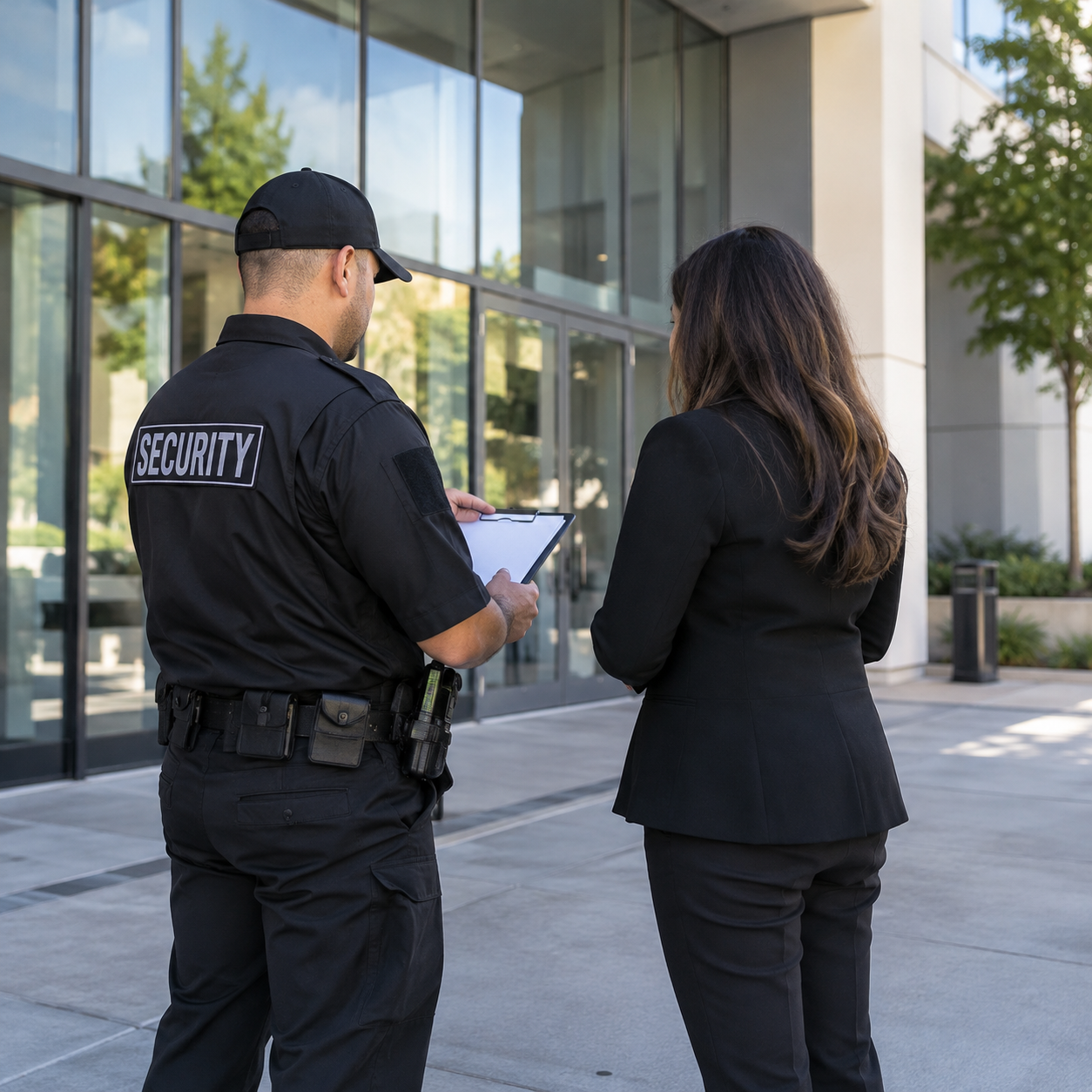
Security Guard Cost Per Hour in California varies considerably depending on the type of protection, location, officer qualifications, and level of risk. For property managers, HOA boards, and business owners, understanding security pricing is essential when planning budgets and comparing providers. While an unarmed security officer may be suitable for routine property protection, armed security, specialized assignments, and emergency coverage typically require a higher investment.
The key is understanding what you’re paying for—not simply choosing the lowest hourly quote. Professional security should provide reliable coverage, trained personnel, effective incident response, and clear reporting that supports your property’s long-term safety.
How Much Do Security Guards Cost in California?
Based on published 2026 security-provider pricing guides, typical client billing rates fall within the following approximate ranges. Actual quotes vary, and these figures are not CWPS-specific prices.
| Security service | Estimated cost |
|---|---|
| Unarmed security guard | $28–$45/hour |
| Armed security guard | $40–$75/hour |
| Event security guard | $40–$80/hour |
| Fire watch security | $35–$70/hour |
| Mobile security patrol | $25–$65/visit |
Mobile patrol is frequently priced per visit rather than per hour, making direct comparisons with dedicated guards difficult.
The operational takeaway: Security Guard Cost Per Hour in California reflects more than an officer’s wages. Training, insurance, supervision, scheduling, equipment, and operational support all contribute to the final contract price.
Six Factors That Influence Security Guard Pricing
1) Armed Versus Unarmed Security
The type of officer assigned to your property significantly affects pricing.
Unarmed security guards typically provide:
-
Visitor verification and access control.
-
Routine property inspections and foot patrols.
-
Incident reporting and conflict de-escalation.
-
Visible deterrence at commercial and residential properties.
Armed security guards may be appropriate for higher-risk environments involving valuable assets, elevated threats, or specialized protection requirements.
Armed assignments generally cost more because of additional qualifications, firearms permits, training, insurance considerations, and operational risk.
The decision should follow a property-specific threat assessment rather than price alone.
2) Property Location and Regional Labor Costs
Security rates differ across Los Angeles, San Diego, Orange County, San Francisco, and inland California communities.
Higher local wages, travel requirements, labor availability, and property risks can affect pricing.
As of 2026, California’s statewide minimum wage is $16.90 per hour, although certain cities and industries require higher rates. The statewide minimum wage will increase to $17.40 on January 1, 2027.
For an official explanation, property owners can read the California Department of Industrial Relations minimum wage guidance. This resource explains the statewide wage baseline and directs readers toward local requirements.
3) Coverage Hours and Shift Requirements
A property requesting security for eight hours each evening will have different costs from a facility requiring continuous coverage.
Pricing may change based on:
-
Overnight shifts and holiday assignments.
-
Short-notice or emergency deployment.
-
Overtime and required relief coverage.
-
Weekend schedules and irregular staffing.
-
Contract length and guaranteed weekly hours.
Understanding Continuous Coverage
One dedicated security position operating 24 hours daily requires 168 coverage hours weekly.
At an illustrative billing rate of $35 per hour, the weekly contract cost would be $5,880, or approximately $25,480 per average month.
That example covers one continuous position, not one employee working every hour. Providers must arrange appropriate shifts, breaks, and relief staffing.
4) Property Size and Security Risk
A small office building and a large industrial warehouse have substantially different security requirements.
Facilities with multiple entrances, extensive parking areas, sensitive equipment, or recurring incidents may require additional officers and patrol resources.
A comprehensive security assessment helps determine whether the property needs permanent posts, mobile patrol coverage, alarm monitoring, or a combination.
5) Training, Licensing, and Experience
Professional security providers must maintain appropriate licensing and officer qualifications.
California’s Bureau of Security and Investigative Services (BSIS) regulates security guard registration and Private Patrol Operators.
Property managers should verify that their security provider meets applicable requirements.
Experienced personnel with specialized training in de-escalation, emergency response, access control, and incident documentation may command higher rates.
6) Equipment, Supervision, and Reporting
Security services require operational infrastructure beyond personnel.
Depending on the contract, costs may include marked patrol vehicles, communication equipment, dispatch coordination, supervisory oversight, uniforms, and digital reporting systems.
These capabilities can improve accountability and incident response, but buyers should confirm which services are included in their quoted rate.
Mobile Patrol Versus Standing Guards: Which Costs Less?
For many properties, the most economical security arrangement is not necessarily a permanently stationed officer.
Standing Security Guards
Dedicated guards are useful when a location requires continuous attention, such as:
-
Apartment building entrances.
-
Corporate reception areas.
-
Construction site access points.
-
High-value commercial facilities.
They provide immediate on-site availability throughout their assigned shifts.
Mobile Security Patrols
Mobile patrol services can cover several properties along established routes, with scheduled or randomized visits.
They are particularly useful for HOAs, parking areas, business parks, and properties requiring periodic security checks.
A combination of mobile patrols and camera monitoring can reduce the number of dedicated guard hours needed, although it cannot provide continuous physical presence.
How to Calculate Your Monthly Security Budget
Understanding Security Guard Cost Per Hour in California becomes easier when you calculate total coverage hours.
Security Cost Calculator
Illustrative cost for one dedicated post, excluding separate fees or surcharges.
Estimated weekly cost
$1,960
Average monthly cost
$8,493
Based on 52 weeks per year. Actual invoices depend on contracted coverage, overtime, holidays, and additional services.
How to Avoid Overpaying for Security Services
The cheapest security quote is not always the most economical option.
Before signing a contract, property managers should:
-
Request an itemized proposal: Identify staffing hours, additional fees, patrol requirements, and supervisory responsibilities.
-
Verify licensing: Confirm the company’s Private Patrol Operator registration through the BSIS license verification system.
-
Evaluate reporting standards: Require time-stamped incident reports and documented patrol activities.
-
Review staffing flexibility: Determine whether coverage can increase during higher-risk periods.
-
Measure performance: Track response times, recurring incidents, patrol completion, and unresolved vulnerabilities.
For a related budgeting perspective, explore our previously published article on Security budget optimization for property managers, which examines how to align security spending with operational needs.
How CWPS Delivers Value Beyond Hourly Pricing
Established in 2012, City Wide Protection Services (CWPS) provides security solutions designed around property-specific risks rather than one-size-fits-all staffing.
Our services include armed and unarmed security guards, courtesy patrols, mobile patrol operations, camera and alarm monitoring, and security consultation.
By combining professional personnel with monitoring and structured reporting, CWPS helps property managers evaluate coverage needs and strengthen security accountability.
Request Security Pricing From CWPS
Understanding Security Guard Cost Per Hour in California is the first step toward building a practical security budget. The next step is identifying the appropriate staffing model, patrol frequency, and response requirements for your property.
Contact CWPS to discuss security services tailored to your location and operational needs.
-
Call: (888) 205-4242
-
Email: [email protected]
FAQ: Common Security Pricing Questions
How much does an unarmed security guard cost per hour in California?
Published 2026 pricing guides commonly place unarmed security guard services around $28–$45 per hour, depending on location, coverage, and contract requirements.
Are armed security guards more expensive?
Yes. Armed security generally costs more because of additional qualifications, training, insurance considerations, and the risks associated with armed assignments.
Is mobile security patrol cheaper than hiring a standing guard?
Often, yes. Mobile patrol can reduce overall costs when a property needs periodic inspections rather than continuous on-site coverage.
Can security companies provide customized pricing?
Yes. Pricing is typically based on property size, operating hours, security risks, staffing needs, and requested services.