Businesses and communities across LA need Los Angeles mobile patrol security services that actually reduce risk—high-visibility patrols, camera-verified alarms, and tight dispatch playbooks that cut response times when it matters. From Downtown and the Arts District to the Westside and the Valley, the right mobile model blends human presence with technology to deter theft, prevent nuisance activity, and protect people and property.
Why mobile patrols matter in Los Angeles
LA’s scale means fixed posts can’t cover every blind spot or late-night hotspot. Mobile patrols deliver dynamic coverage—staggered sweeps, must-hit checkpoints, and rapid reinforcement where patterns show recurring issues (garages, loading docks, outlying lots). Pair that with a 24/7 monitoring center that verifies alarms (video + audio talk-down) before dispatching, and you reduce false alarms while speeding the right response.
For context on LA crime patterns and recent downward trends in several categories, review the City’s 2024 end-of-year summary (read more there): Mayor of Los Angeles
The mobile patrol framework that works
Measurable KPIs
- Alert-to-Verify (seconds): Time from alarm to camera verification.
- Verify-to-Dispatch (seconds): Time to deploy patrol or supervisor.
- On-Scene Arrival (minutes): Time to arrival by zone and time window.
- False-alert reduction: % cut via verification and analytics.
- Closure quality: Share of cases with photo/video evidence and notes.
Patrol route design
- Risk-weighted loops: More passes where incidents cluster (mailrooms, garages).
- Time-of-day tuning: Package spikes (5–9 p.m.), garage checks (10 p.m.–2 a.m.), perimeter sweeps (2–5 a.m.).
- Proof-of-presence: QR/NFC checkpoints and photo notes for transparent reporting.
SOC (security operations center) integration
- Event-based camera analytics: Loitering, door-prop, repeat badge failures.
- Audio talk-down: Real-time warnings that deter trespass and vandalism.
- Unified tickets: Camera clips + patrol notes for managers and law enforcement.
Layering mobile patrols with CPTED and access control
Mobile coverage gets stronger when the environment helps. Simple CPTED (Crime Prevention Through Environmental Design) fixes—better sightlines, lighting, and “ownership cues” like clear signage—shrink opportunity and fear while making patrols more efficient. For a practical primer you can share with property teams and vendors, see this CPTED guidebook.
Where policy allows, ALPR (automated license plate recognition) at entrances/exits helps identify chronic offenders and builds evidence packages—useful when paired with governance on retention and access. See LAPD’s ALPR guidance snapshot for how large agencies structure data management.
What Los Angeles mobile patrol security services should include
High-visibility deterrence
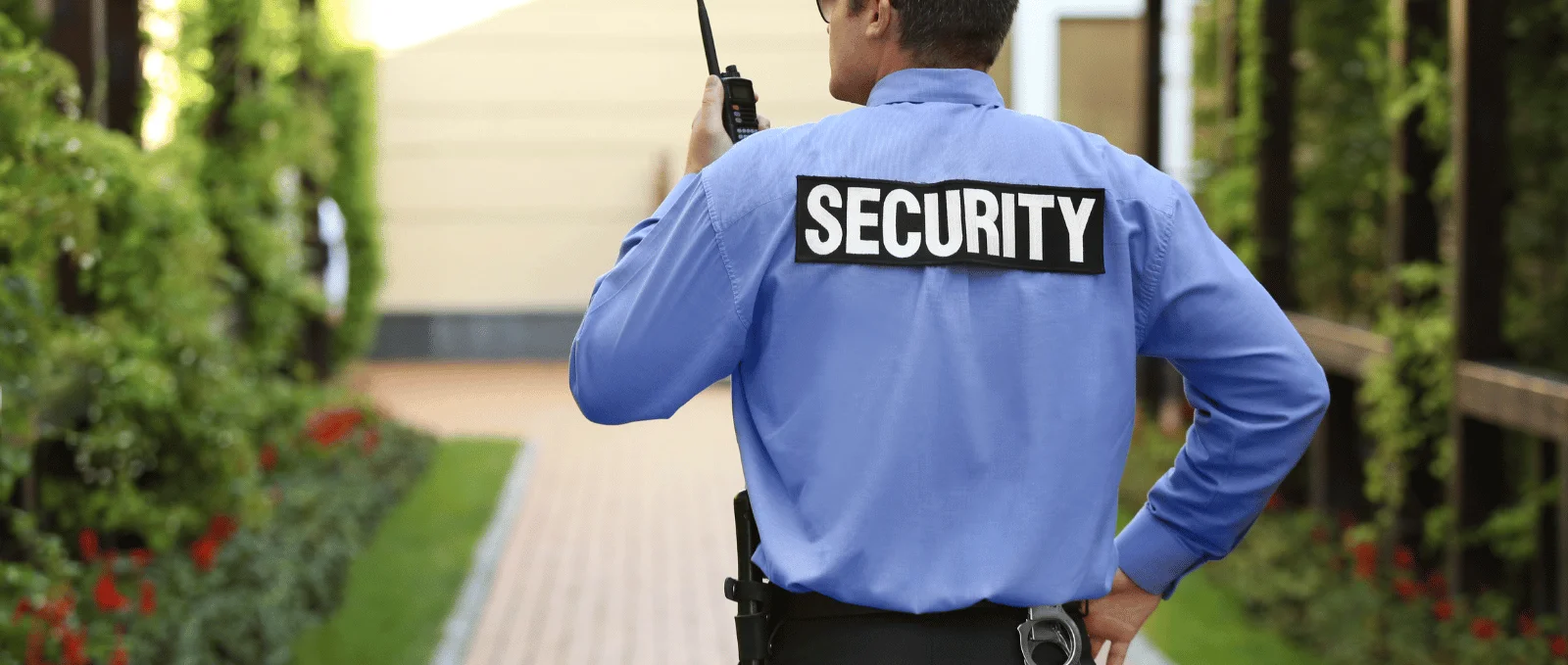
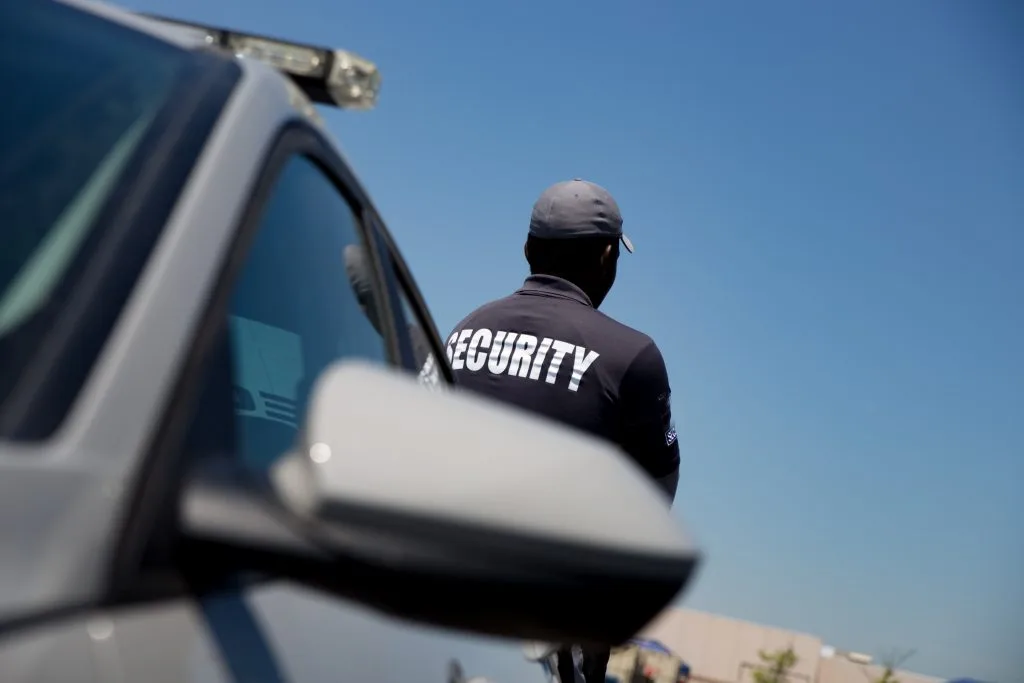
Marked vehicles, professional uniforms, and predictable-but-not-rigid patterns. Visibility reduces opportunistic crimes and calms resident/visitor concerns.
Directed enforcement with empathy
Parking reinforcement, trespass advisals, and after-hours policy reminders—all handled with de-escalation first. Good security keeps places welcoming.
Camera-verified alarm response
Your monitoring team verifies the trigger (and talks down if needed), then dispatches the closest unit—cutting false alarms and improving outcomes.
Evidence-ready reporting
Every incident should close with photo/video, timestamps, and actions taken—clean packages you can use for hearings, insurance, or police follow-up.
Building community partnerships that work
LA pioneered Neighborhood Watch, and well-run programs remain a force multiplier—residents and businesses who know how to report, what to look for, and how to help patrols do more with less. Direct stakeholders to LAPD’s Neighborhood Watch resources for best practices.
One-month rollout plan (fast and realistic)
Week 1 — Risk walk & route draft
Walk properties by day and night. Map entries, garages, mailrooms, alleys, and blind spots. Prioritize with a likelihood × consequence matrix, then draft loops and checkpoint lists.
Week 2 — Quick wins
Fix lighting and camera angles, add “Monitored & Patrolled” signage, tune door closers and timers, and publish a one-page “How Security Works Here” for tenants/residents.
Week 3 — Micro-drills & scripts
Run 10-minute drills: tailgate at garage, door-prop alarm at service entry, late-night loitering at loading dock. Finalize SOC scripts (verify → talk-down → dispatch).
Week 4 — Launch & dashboard
Turn on KPIs (Alert-to-Verify, Verify-to-Dispatch, On-Scene Arrival), track false-alert reduction, and start a monthly review with property management.
Choosing posture: unarmed, semi-armed, or armed
- Unarmed patrols: Ideal for community-facing settings—amenity checks, parking, policy reminders, and escorted lock/unlock.
- Semi-armed patrols: Consider larger or higher-risk footprints (late-night garages, repeated trespass) with stronger supervision and reporting.
- Armed patrols: Reserve for documented higher-risk scenarios aligned with counsel and insurance; selection, training, and audits must be tighter.
Whichever posture you choose, invest in customer-service and de-escalation training. Safety and hospitality can—and should—coexist.
Technology that amplifies results (not noise)
- Analytics on the edges: Loitering at gates, dwell time in alcoves, repeated badge failure alerts.
- Body-worn cameras (as policy allows): Evidence clarity and training value.
- Mobile reporting apps: Faster signal from field to SOC to you.
Internal link: extend protection to San Diego sites
Many LA-based operators have facilities in San Diego too. See how our 24/7 Mobile Patrols San Diego model layers verification, directed routes, and must-hit checkpoints—useful if you’re standardizing across counties.
Ready to modernize your LA patrols?
Let’s tailor Los Angeles mobile patrol security services to your properties, hours, and risk patterns—measurable, courteous, and effective.
Call us: (888) 205-4242
Email: [email protected]