Modern properties can’t afford slow reaction times. Remote guarding and live video monitoring California programs combine analytics-enabled cameras, trained virtual guards, and rapid dispatch agreements to deter intrusions in real time—not just document them after the fact. Deployed correctly, they reduce false alarms, speed responses, and stretch your budget further than traditional “watch and report” models.
Why properties are shifting to remote guarding
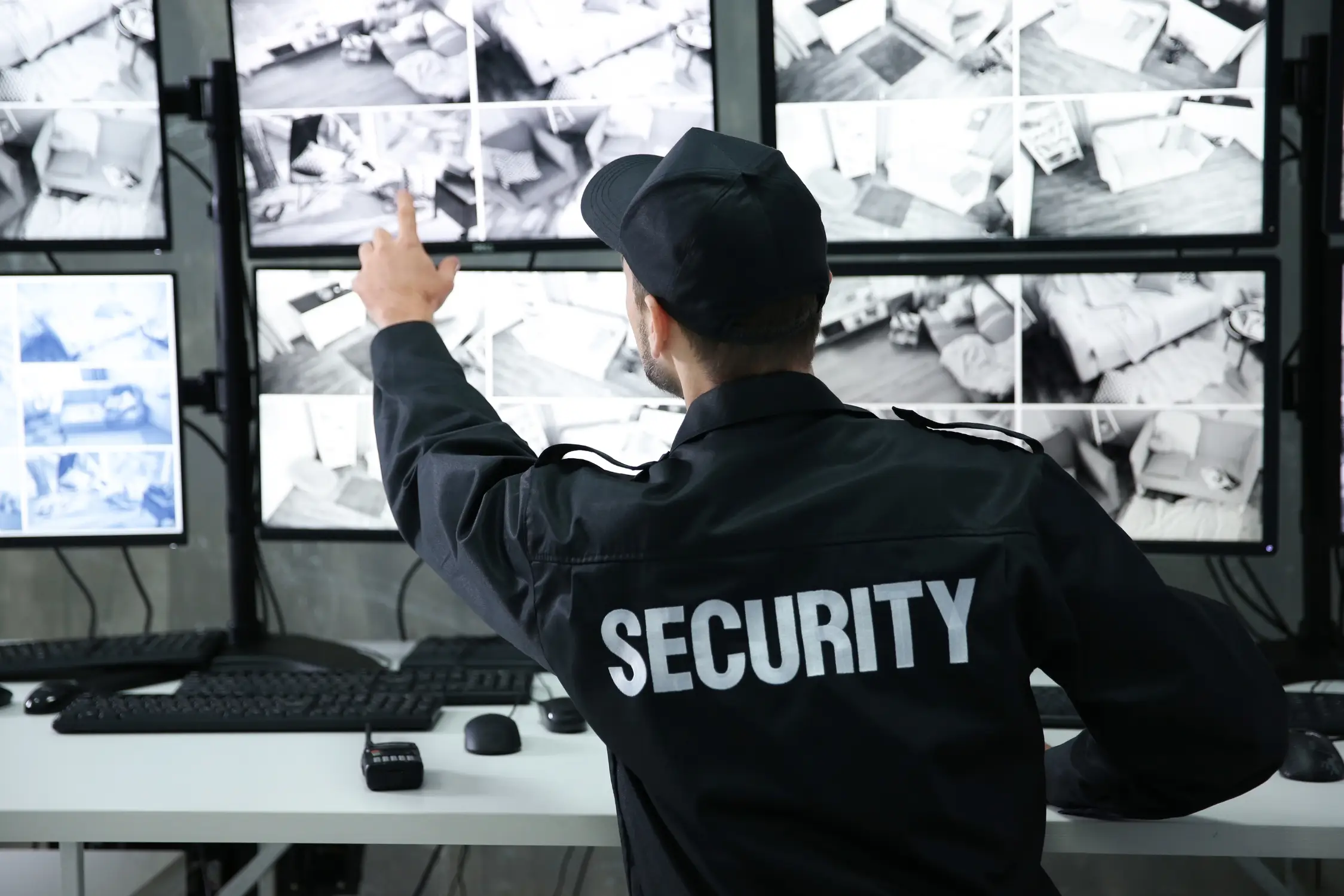
Remote guarding replaces passive surveillance with human-in-the-loop intervention. AI analytics flag a person, vehicle, or behavior of interest; a live operator verifies the event, issues voice-down warnings through speakers, and coordinates on-site response. The result is fewer missed events and fewer unnecessary roll-outs—especially valuable overnight, on weekends, and across large footprints like commercial campuses, HOAs, and logistics yards.
What “live” really means
- Live verification: Operators confirm events within seconds, filtering out wind, pets, or shadows.
- Live intervention: Voice-down, strobe activation, or access control actions can stop incidents before they escalate.
- Live dispatch: Integrated CAD/dispatch launches patrols or meets law enforcement with precise, time-stamped evidence.
Core components of a California-ready solution
Smart cameras and edge analytics
High-resolution cameras with perimeter, line-cross, or loitering rules push only meaningful alerts. Thermal or low-light imagers protect alleys, rooftops, and unlit perimeters without adding light pollution.
Redundant communications
Dual-path IP/cellular routing keeps streams and alerts flowing during outages. That resilience is crucial for compliance with central-station standards such as UL 827, which governs monitoring center operations and redundancy. (You can read more about the central-station benchmark in UL’s description of UL 827.)
SOC + central station synergy
Your monitoring center (SOC) should pair software dashboards with documented operating procedures: tiered escalation, call trees, incident codes, and reporting SLAs. For broader facility protection and coordinated planning, federal guidance from the Interagency Security Committee (ISC) outlines governance and risk-based approaches that pair well with camera monitoring strategies.
Where live video monitoring delivers outsized ROI
After-hours and weekends
Foot traffic thins while risk rises (trespass, copper theft, vandalism). Remote guards deter with voice-downs and cue first responders with exact camera locations.
Loading docks, yards, and garages
Analytics distinguish people and vehicles from environmental noise. License plate recognition (LPR) can flag a watch-listed plate and trigger an immediate operator action (voice-down + patrol dispatch).
Lobbies and access points
Operators verify tailgating, prop-open doors, or suspicious behavior and alert on-site teams while preserving audit trails for post-incident reviews.
Evidence that video monitoring deters crime
Multiple systematic reviews have found that well-designed CCTV deployments produce a modest but meaningful reduction in crime, particularly for property offenses. While technology alone isn’t a silver bullet, coupling cameras with active monitoring and intervention accelerates those benefits by turning detection into deterrence. For further reading, see Piza et al.’s peer-reviewed overview of CCTV effectiveness and meta-analytic findings.
Design a layered program (and avoid common pitfalls)
1) Start with a risk-based site survey
Map high-value assets, ingress/egress, lighting, and historic incident data. Use that to place analytics-capable cameras where behavior can be distinguished from background motion.
2) Use clear rules of engagement
Operators need scripted voice-downs, trespass policies, and escalation paths (property management, patrol, law enforcement). Tie each alert type to a discrete action and time bound.
3) Build reporting that drives action
Dashboards and weekly reports should quantify alerts handled, voice-downs issued, dispatches made, and resolved outcomes. This becomes a budget justification tool for stakeholders.
4) Engineer for continuity
Redundant power, network failover, and tested disaster procedures keep your SOC live during storms or planned maintenance—key expectations reflected in UL 827 central-station practices.
5) Align with recognized frameworks
While your vendor configures cameras and VMS, you should also align procedures with recognized federal facility security recommendations to ensure governance, training, and testing keep pace with tech.
Compliance, privacy, and policy
California properties benefit from transparent signage, tight data retention policies, and access controls for recorded footage. Your monitoring provider should document who can view, export, or share clips, and how long evidence is retained based on your legal counsel’s guidance. (ISC materials provide a strong baseline for policy development and oversight, which you can adapt to private-sector environments.)
Remote guarding vs. on-site guards: how to blend
- Cost: Remote guarding often covers broad areas for the cost of a single on-site post.
- Speed: Verification + voice-down can interrupt incidents before guard arrival.
- Coverage: Great for perimeters, rooftops, and closed areas where regular patrol frequency is limited.
- Best practice: Blend both. Use remote monitoring for detection/deterrence and mobile patrol or standing posts for hands-on response and community engagement.
Want to explore a local case? See our related guide on remote video guarding services in San Diego for deployment styles and neighborhood use cases.
Implementation roadmap (60 days)
Week 1–2: Assessment & design
Threat survey, camera/VMS audit, coverage heat map, escalation matrix, and policy review.
Week 3–5: Build & integrate
Install/relocate cameras, configure analytics, add speakers, connect access control, and integrate with the SOC and dispatch platform.
Week 6–7: Pilot & tune
Run a soft-launch at high-risk zones; tune rules to reduce nuisance alerts and sharpen response scripts.
Week 8: Go live & prove value
Publish a baseline report—incident counts, voice-down compliance, dispatch times—and set quarterly targets.
When remote guarding is the obvious win
- Large perimeter or multi-entrance sites (industrial parks, HOAs, mixed-use).
- Vulnerable periods (overnight, holidays, construction phases).
- Properties with frequent nuisance activity where voice-down resolves most incidents quickly.
- Multi-site portfolios that need centralized oversight and consistent reporting.
External resources for decision-makers
- UL 827 (monitoring center standard): a foundational benchmark for redundancy and operations.
- ISC/CISA facility security guidance: governance and layered protection practices you can adapt to private properties.
- CCTV effectiveness evidence: overview of research showing modest but significant crime-prevention effects when done right.
Talk to a California team that does both tech and response
We design, monitor, and respond—tying cameras, speakers, analytics, and dispatch into one accountable program. Let’s build your custom plan.
Call us: 888-205-4242
Email: [email protected]