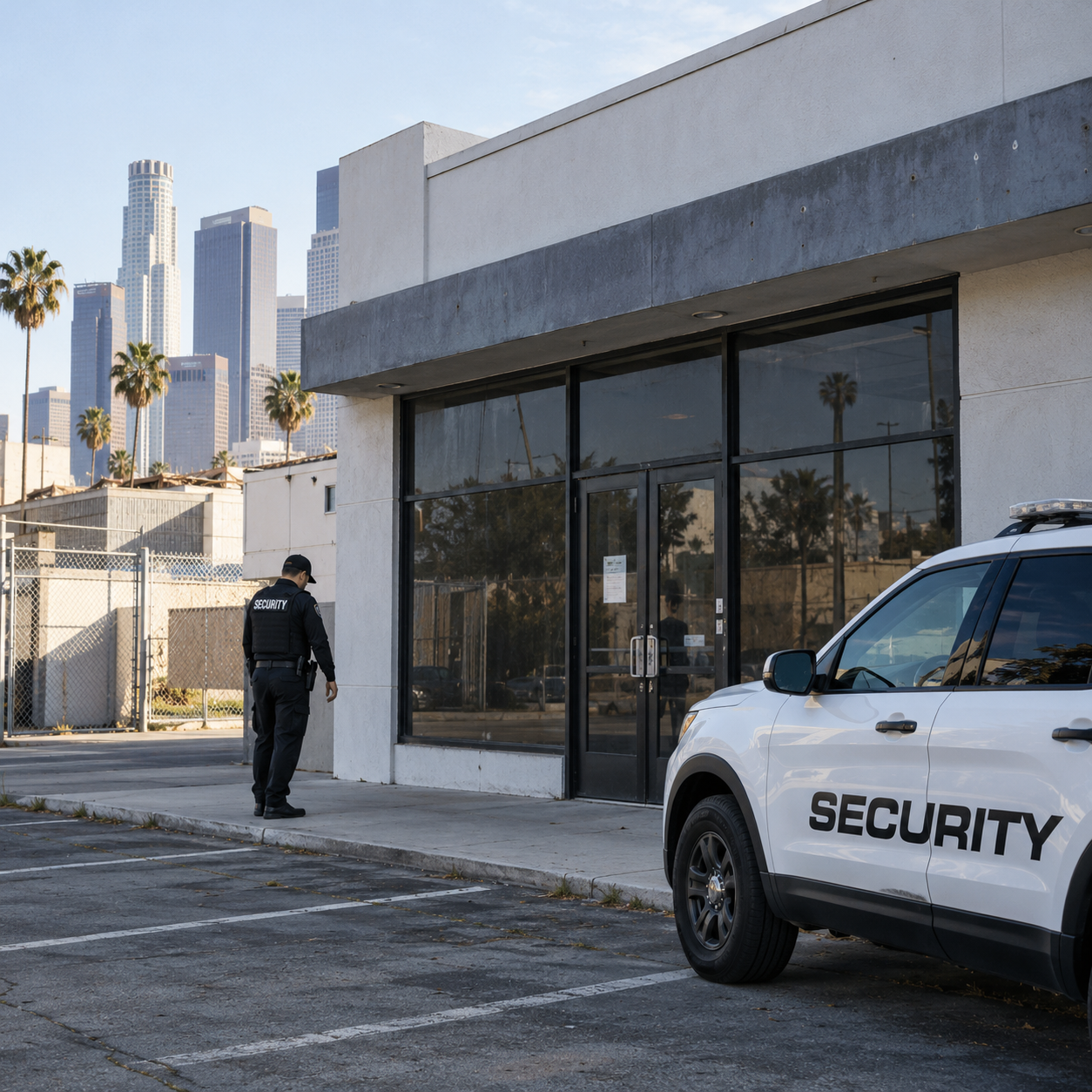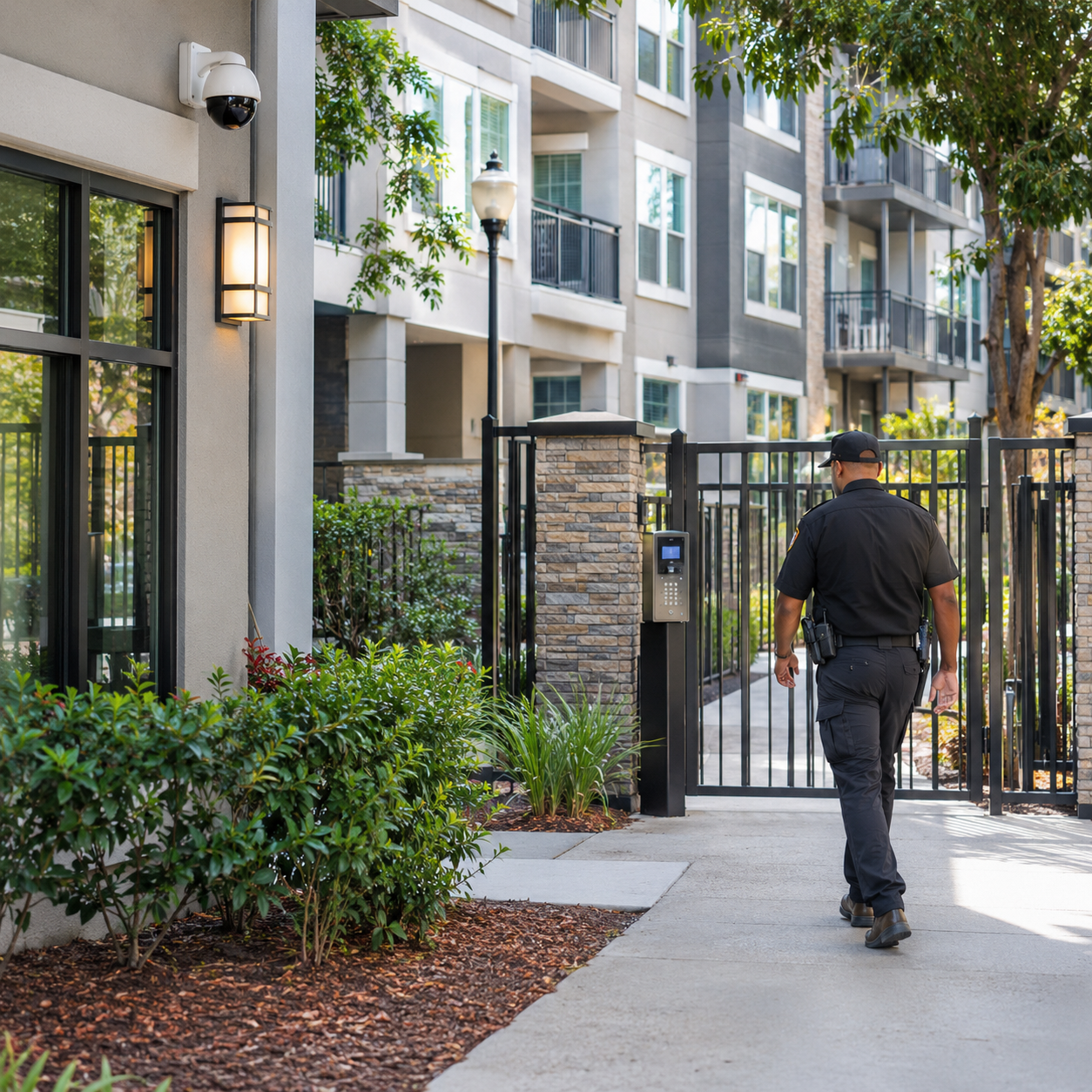
Apartment Complex Crime Prevention Strategies should address more than occasional break-ins or suspicious activity. Multifamily properties have shared entrances, parking structures, delivery areas, and common spaces that create security challenges not typically found in single-family homes. Without consistent access control, property inspections, and incident response procedures, small vulnerabilities can develop into recurring problems.
For apartment owners and property managers, the objective is to prevent opportunities for crime while maintaining a comfortable living environment. A layered approach combining professional security patrols, surveillance, physical improvements, and resident communication helps achieve that balance.
Why Apartment Complexes Need Specialized Crime Prevention
Apartment communities experience constant movement. Residents, visitors, delivery drivers, maintenance contractors, and prospective tenants may enter throughout the day.
This activity creates several common security vulnerabilities:
- Unauthorized access: Tailgating through controlled entrances or using shared access codes.
- Parking-related crime: Vehicle break-ins, theft, and vandalism in garages and outdoor lots.
- Package theft: Unsecured delivery areas and unattended parcels.
- Common-area disturbances: Unauthorized amenity use, trespassing, and recurring noise complaints.
- Poorly maintained entrances: Broken locks, damaged fencing, and malfunctioning gates.
The operational takeaway: Effective apartment security begins by identifying where access, visibility, and supervision are weakest, then implementing measures that address those specific problems.
Six Essential Apartment Crime Prevention Strategies
1) Strengthen Building Access Control
Unrestricted access is one of the most preventable security weaknesses in multifamily properties.
Apartment managers should establish clear procedures for residents, visitors, contractors, and delivery personnel.
Important measures include:
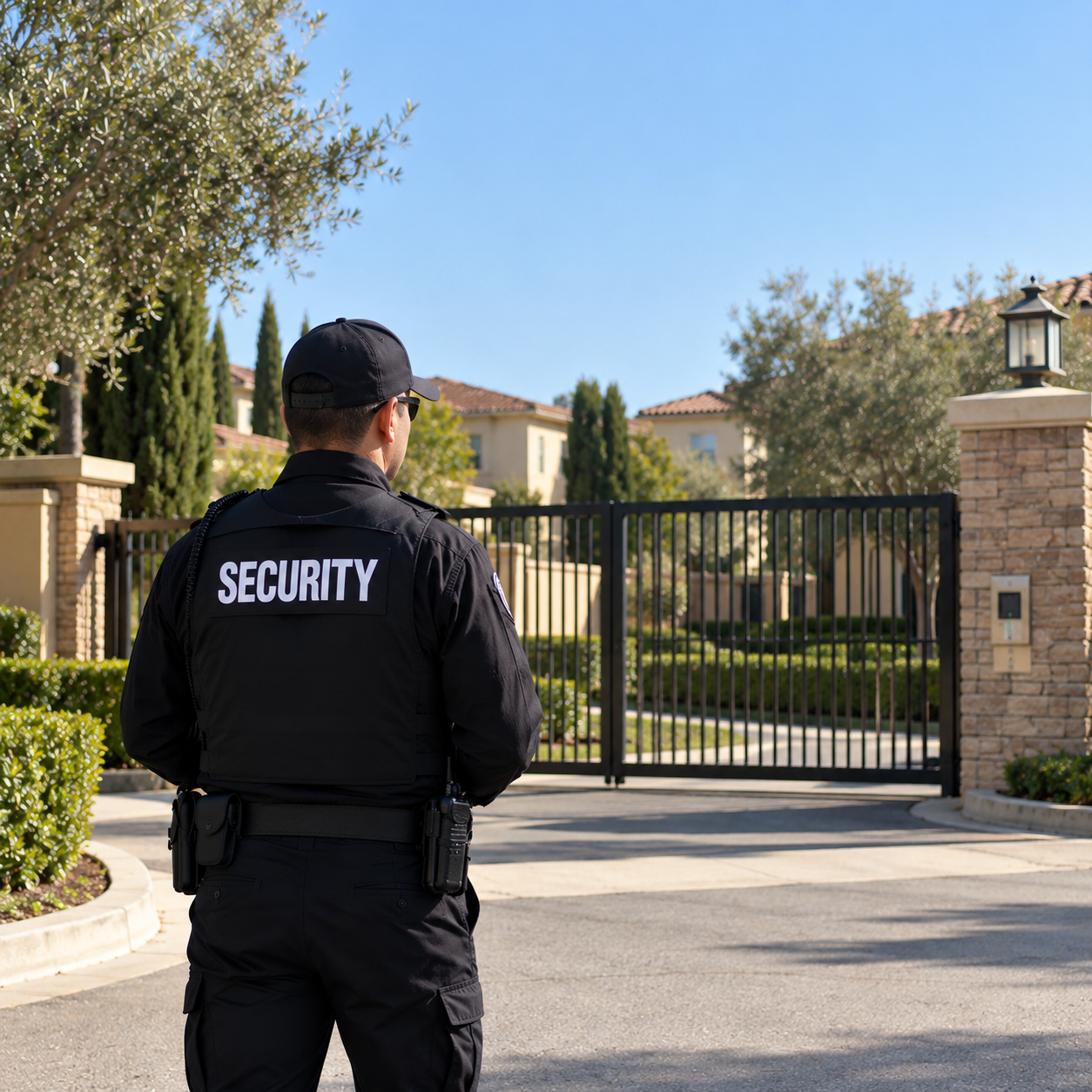
- Controlled entrances: Use appropriate key fobs, access cards, or managed entry systems.
- Visitor procedures: Establish consistent authorization requirements for guests and vendors.
- Credential management: Deactivate lost credentials and remove access when residents or employees leave.
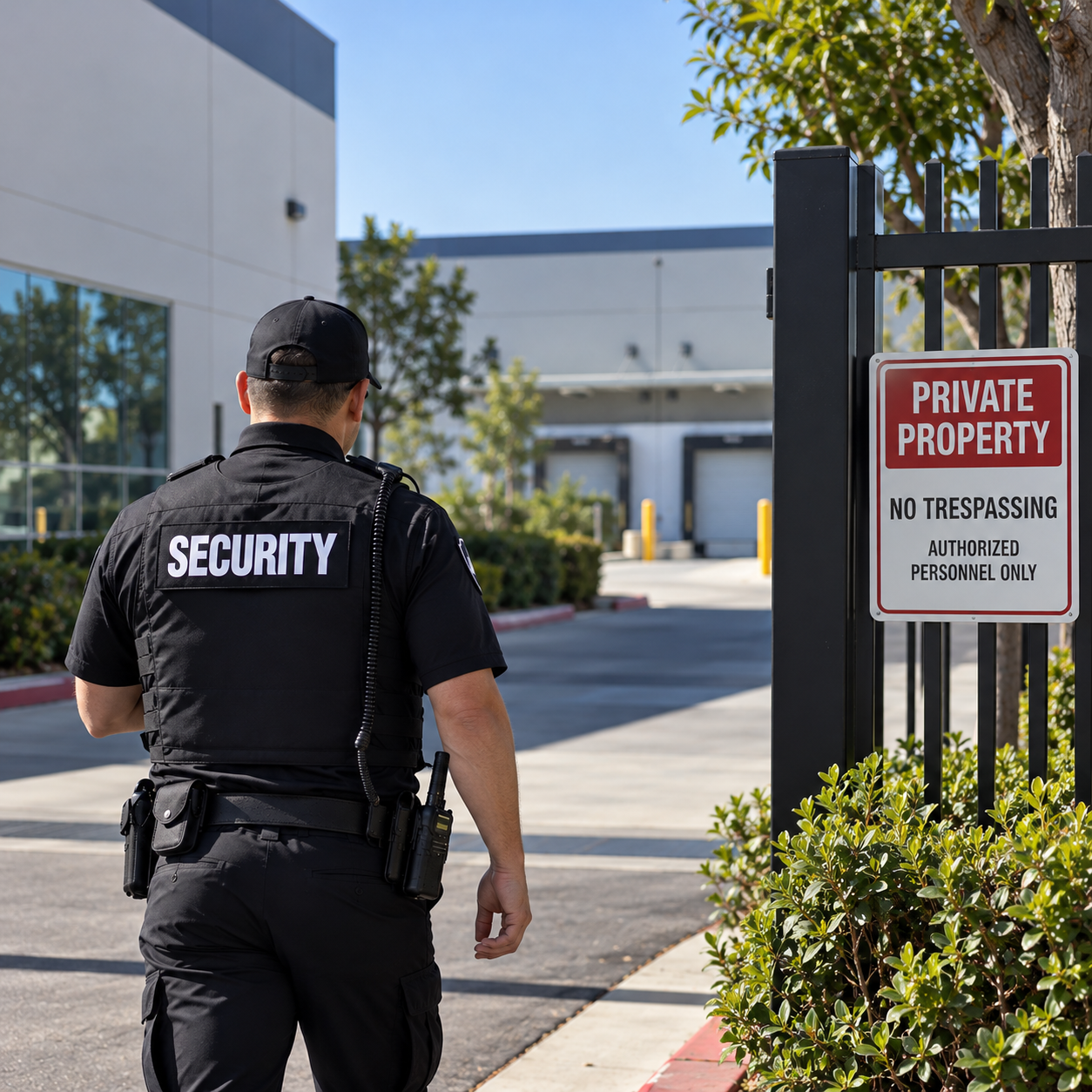
- Door inspections: Check pedestrian gates, garage entrances, and service doors for damage or improper closure.
Don’t Overlook Secondary Entrances
A secure main entrance offers limited protection if residents regularly leave side doors propped open.
Include secondary access points in maintenance inspections and security patrol instructions. Ensure all modifications preserve required emergency exits and accessibility.
2) Improve Lighting and Natural Surveillance
Crime Prevention Through Environmental Design (CPTED) focuses on reducing opportunities for criminal activity through better property design and management.
For apartment communities, this includes improving visibility around entrances, walkways, parking facilities, and shared amenities.
Practical improvements include:
- Repairing broken exterior lighting promptly.
- Trimming landscaping that blocks visibility.
- Eliminating concealed spaces near entrances.
- Maintaining clear directional and building signage.
- Keeping vacant units and storage areas secured.
What Research Says About Apartment Security
Research published in the American Journal of Criminal Justice in 2025 examined environmental design, management practices, and crime across 237 multifamily apartment sites.
The findings suggest that security outcomes depend on interactions between physical design and management practices, with secured access associated with lower crime counts in certain settings.
For further information, property managers can read the study through the U.S. Department of Justice Office of Justice Programs.
The practical lesson is that better lighting, controlled access, and attentive property management should work together rather than operate as separate improvements.
3) Prioritize Parking Lot and Garage Security
Parking areas deserve particular attention because they frequently contain valuable vehicles and personal belongings while experiencing relatively limited supervision.
A strong parking security program should include:
- Regular inspections of parking structures and stairwells.
- Functional lighting around vehicle entrances and pedestrian paths.
- Camera coverage at appropriate entry and exit points.
- Monitoring for damaged gates and unauthorized access.
- Clear procedures for reporting suspicious behavior.
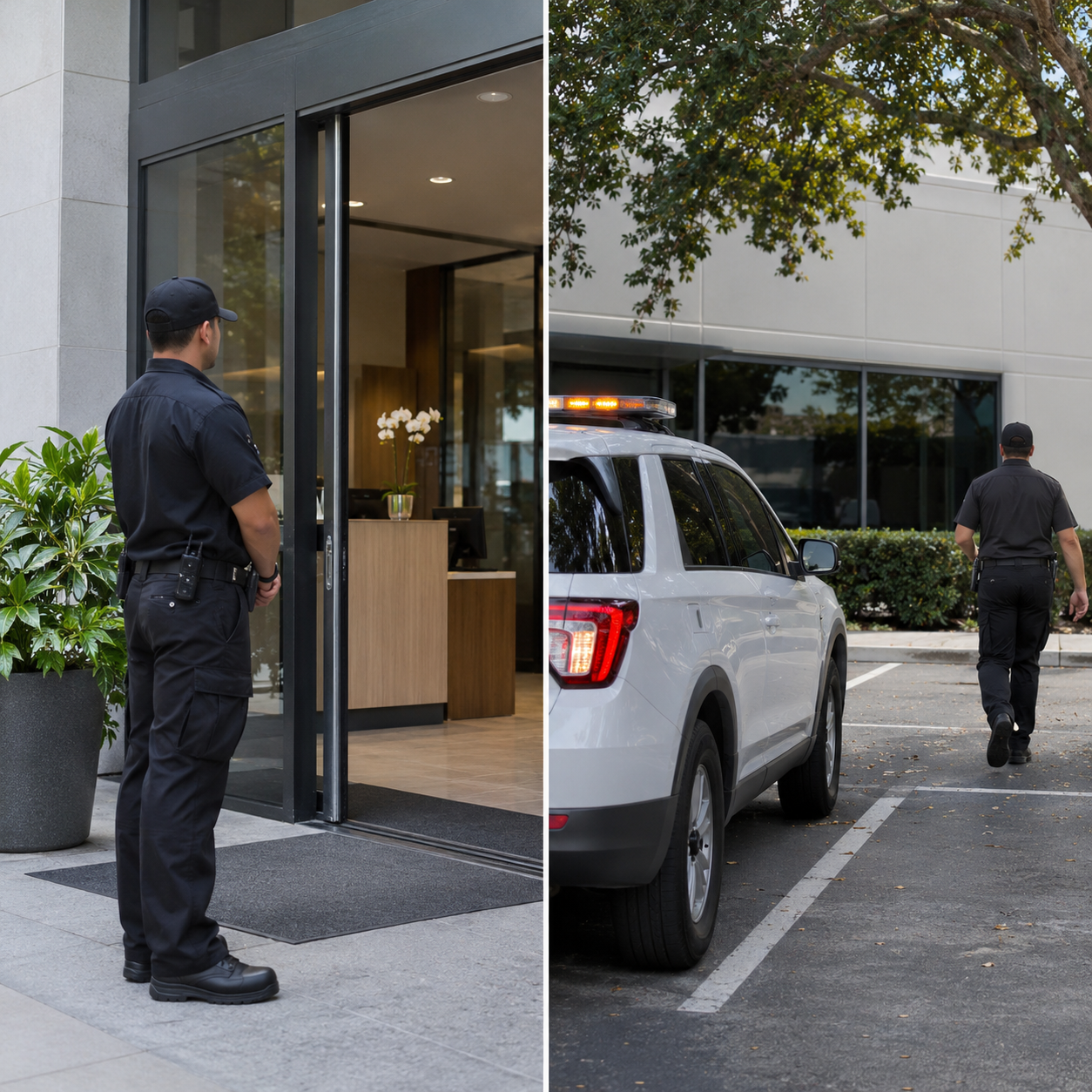
Security patrols should periodically inspect parking areas on foot instead of relying exclusively on vehicle drive-throughs.
Why this matters: A damaged garage gate or poorly illuminated stairwell can remain vulnerable long after an initial incident unless someone identifies and reports the condition.
4) Use Professional Security Patrols Strategically
Visible security personnel can discourage opportunistic activity while providing residents with a reliable point of contact.
However, effective patrol programs require more than repeatedly following the same route.
For apartment complexes, consider:
- Scheduled inspections: Check entrances, amenities, parking areas, and perimeter locations.
- Randomized patrols: Vary inspection times to reduce predictable coverage gaps.
- Directed patrols: Increase attention around locations experiencing recurring incidents.
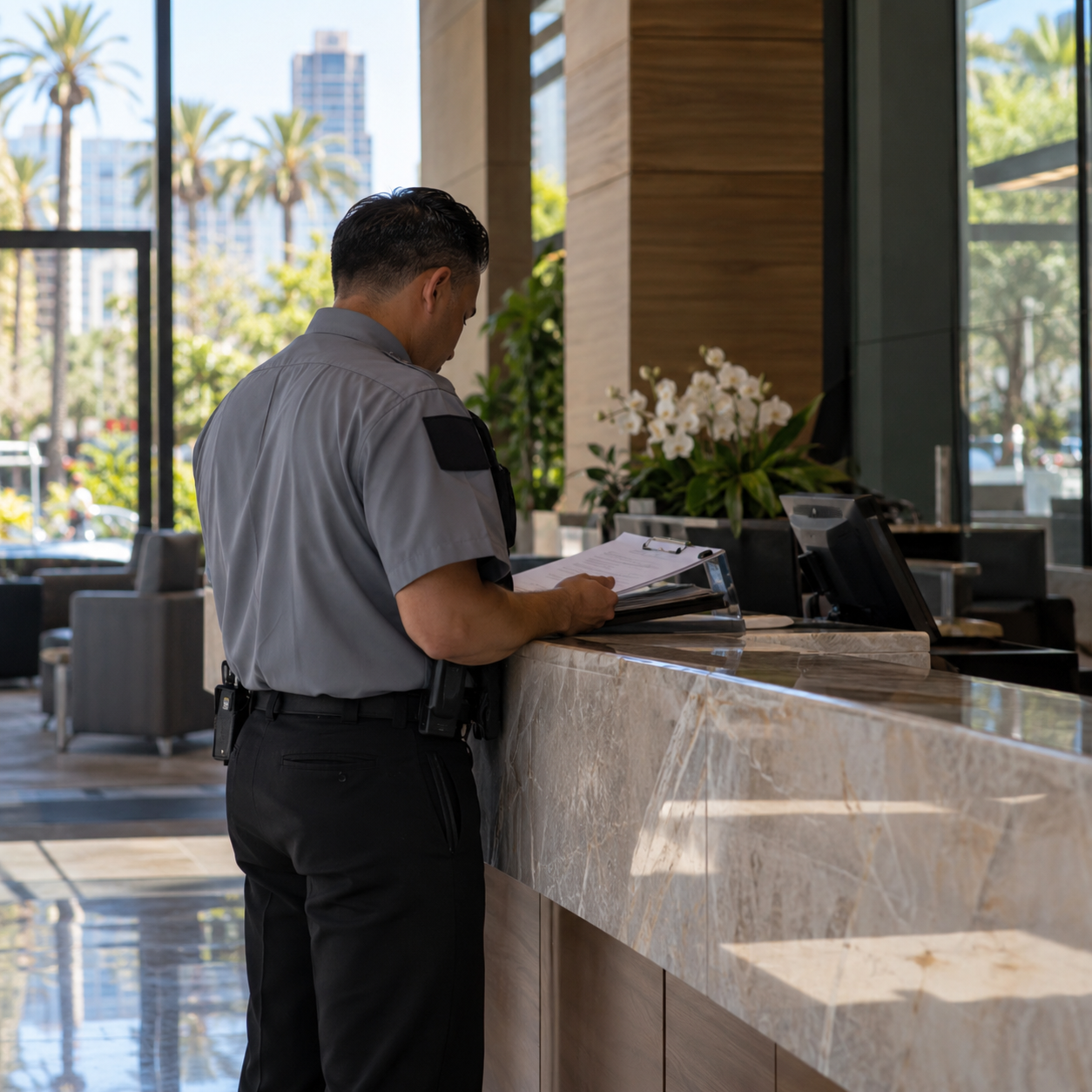
- Documented findings: Record damaged property, unsecured entrances, and suspicious activity.
Mobile Patrols vs. Dedicated Officers
Mobile patrol services work well for larger communities requiring periodic inspections across multiple buildings.
Dedicated guards may be more appropriate when a property requires continuous lobby coverage, visitor screening, or an immediate on-site security presence.
Some communities benefit from combining both approaches during different operating hours.
5) Connect Camera Monitoring With Incident Response
Security cameras provide valuable visibility, but footage has limited preventive value if suspicious activity is discovered only after an incident.
Where appropriate, monitored cameras and alarm systems can support faster verification and response.
A practical process includes:
- A camera or alarm identifies activity requiring attention.
- Monitoring personnel assess the available information.
- Security officers receive the location and relevant details.
- Responders follow approved escalation procedures.
- Incident records preserve the observations and actions taken.
Camera placement should focus on legitimate security needs, particularly shared entrances and common areas, while respecting resident privacy.
6) Build a Consistent Resident Reporting Process
Residents frequently notice problems before management does.
A broken access gate, repeated package theft, or suspicious activity near a stairwell may first appear as an isolated complaint.
Create a simple reporting process that allows residents to notify management or security without unnecessary complications.
Encourage residents to report:
- Unsecured building entrances.
- Suspected theft or vandalism.
- Broken exterior lighting.
- Repeated unauthorized access.
- Safety concerns in shared areas.
Important: Resident participation should emphasize observation and timely reporting, not personal confrontation or profiling.
Turn Incident Reports Into Preventive Action
One of the most overlooked apartment complex crime prevention strategies is reviewing security reports for recurring patterns.
A useful incident report should include the time, exact location, observed activity, response actions, and recommended follow-up.
Property managers should track:
- Incident frequency by building or location.
- Recurring access-control failures.
- Security response times.
- Patrol completion and inspection findings.
- Unresolved maintenance-related vulnerabilities.
For example, repeated trespassing near the same pedestrian gate may indicate a hardware problem rather than a need for more patrol visits.
Monthly reviews help identify these distinctions and guide security spending.
A Practical 30-Day Crime Prevention Plan
Week 1: Assess Property Vulnerabilities
Inspect entrances, parking facilities, stairwells, lighting, and existing camera coverage. Review previous security incidents and resident complaints.
Week 2: Address Immediate Weaknesses
Repair damaged locks, improve lighting, update access permissions, and clarify visitor procedures. Prioritize problems creating direct safety concerns.
Week 3: Optimize Security Coverage
Establish patrol checkpoints, review monitoring procedures, and create clear escalation instructions for recurring incidents.
Week 4: Review Results
Evaluate incident reports, inspection records, unresolved vulnerabilities, and resident feedback. Adjust patrol schedules or property procedures based on documented findings.
How CWPS Supports Apartment Community Security
Established in 2012, City Wide Protection Services (CWPS) provides security services for residential and commercial properties, including multifamily communities.
Our capabilities include courtesy patrols, mobile patrols, armed and unarmed security personnel, camera and alarm monitoring, and security consultation.
CWPS emphasizes professional personnel, property-specific planning, courteous resident interactions, and structured incident documentation.
For additional information about multifamily protection, read our previously published article on San Diego Security Services for Apartment Complexes. It explores access control, surveillance, and security coverage specifically for apartment communities.
Strengthen Your Apartment Security With CWPS
Implementing effective Apartment Complex Crime Prevention Strategies requires identifying vulnerabilities, improving property procedures, and choosing appropriate security coverage.
Whether you manage a small residential building or a large multifamily community, CWPS can help evaluate suitable patrol, monitoring, and staffing solutions for your property.
Contact our team to discuss your security requirements.
- Call: (888) 205-4242
- Email: [email protected]
FAQ: Quick Answers for Property Managers
What is the most effective way to prevent crime in apartment complexes?
A combination of controlled access, adequate lighting, professional security patrols, monitoring, and consistent incident reporting provides a stronger preventive approach than any single measure.
Are mobile security patrols suitable for apartment communities?
Yes. Mobile patrols can inspect multiple buildings, parking areas, and shared spaces. Dedicated officers may be preferable where continuous coverage is required.
Can security cameras replace apartment security guards?
Not entirely. Cameras assist with detection and documentation, while trained personnel provide physical verification, communication, and appropriate incident response.