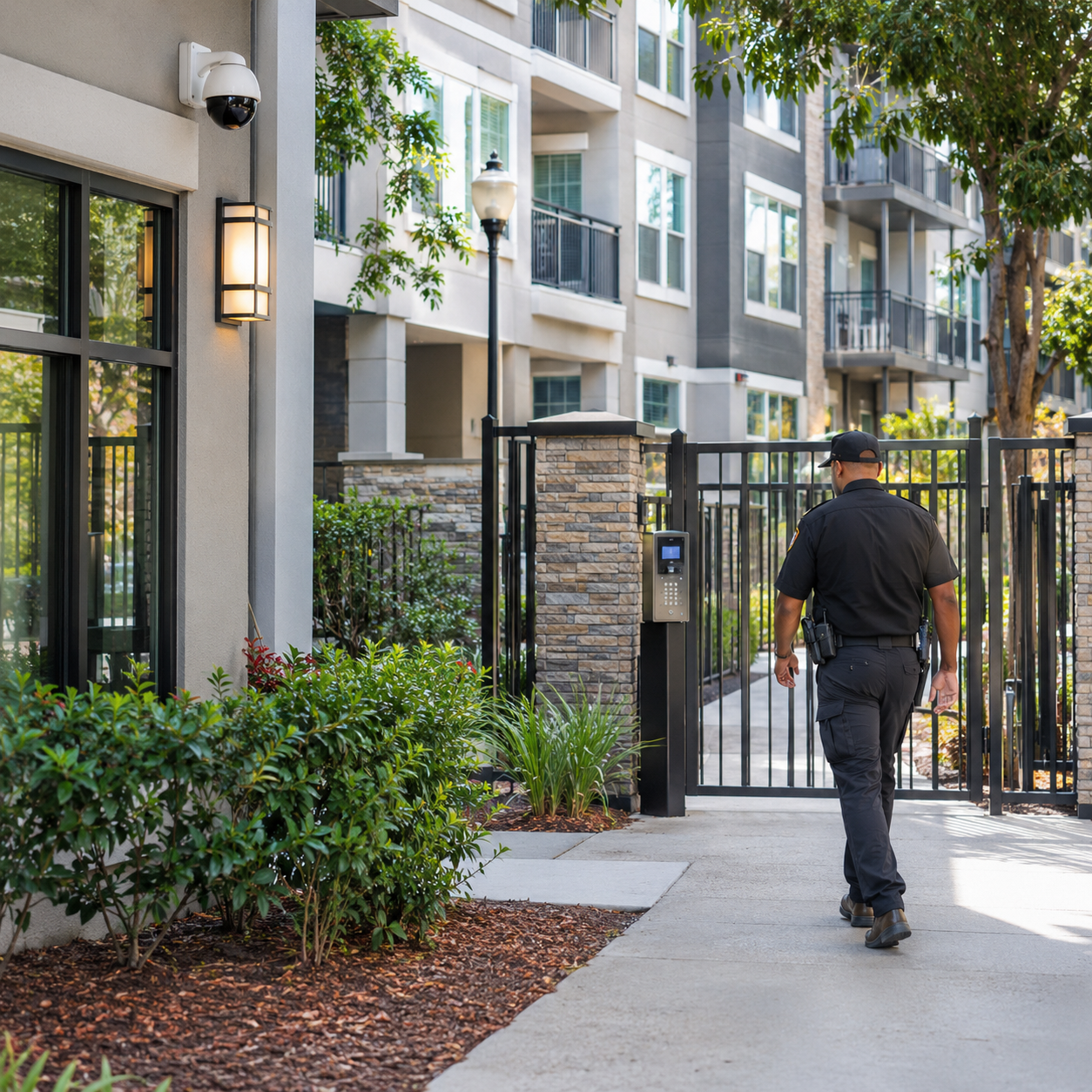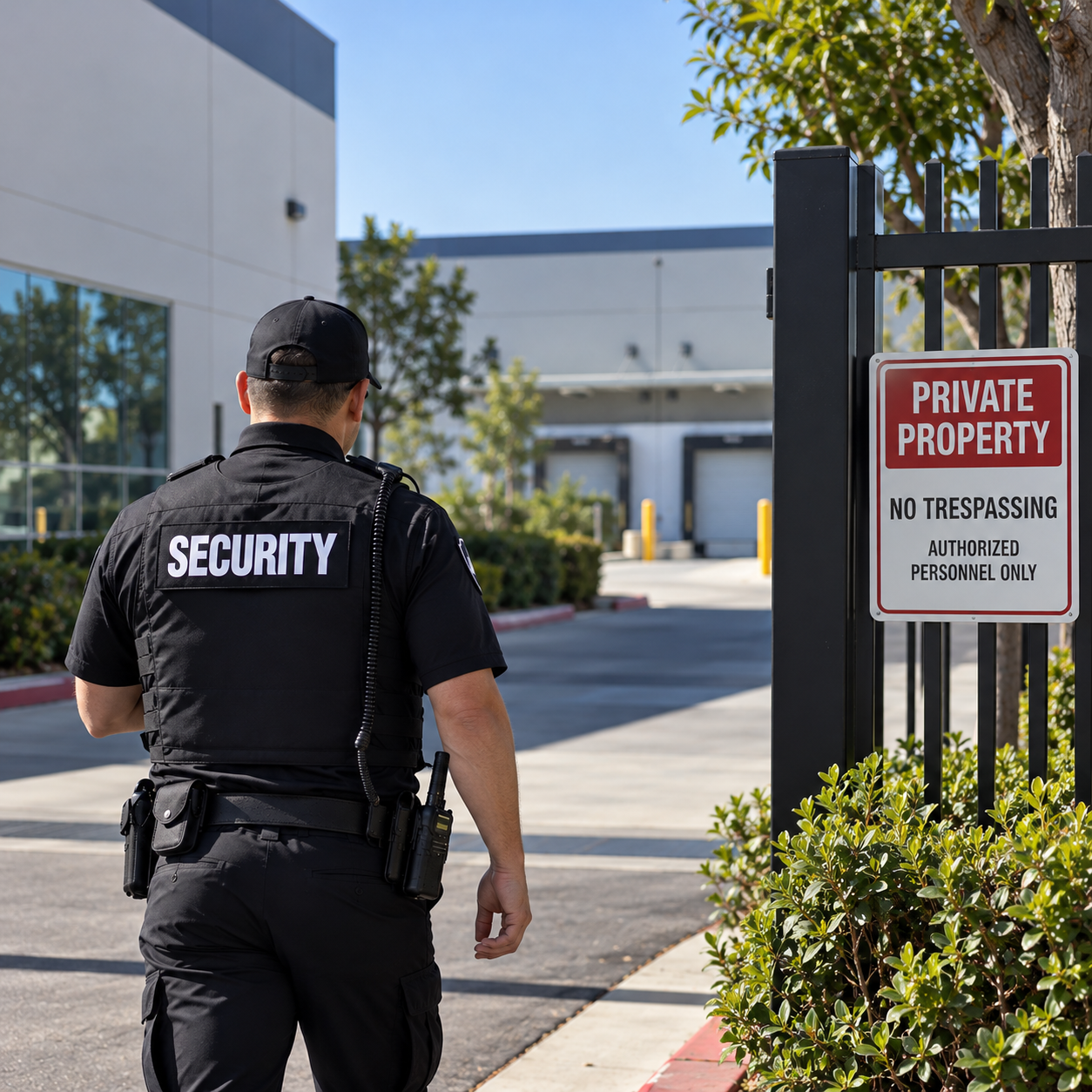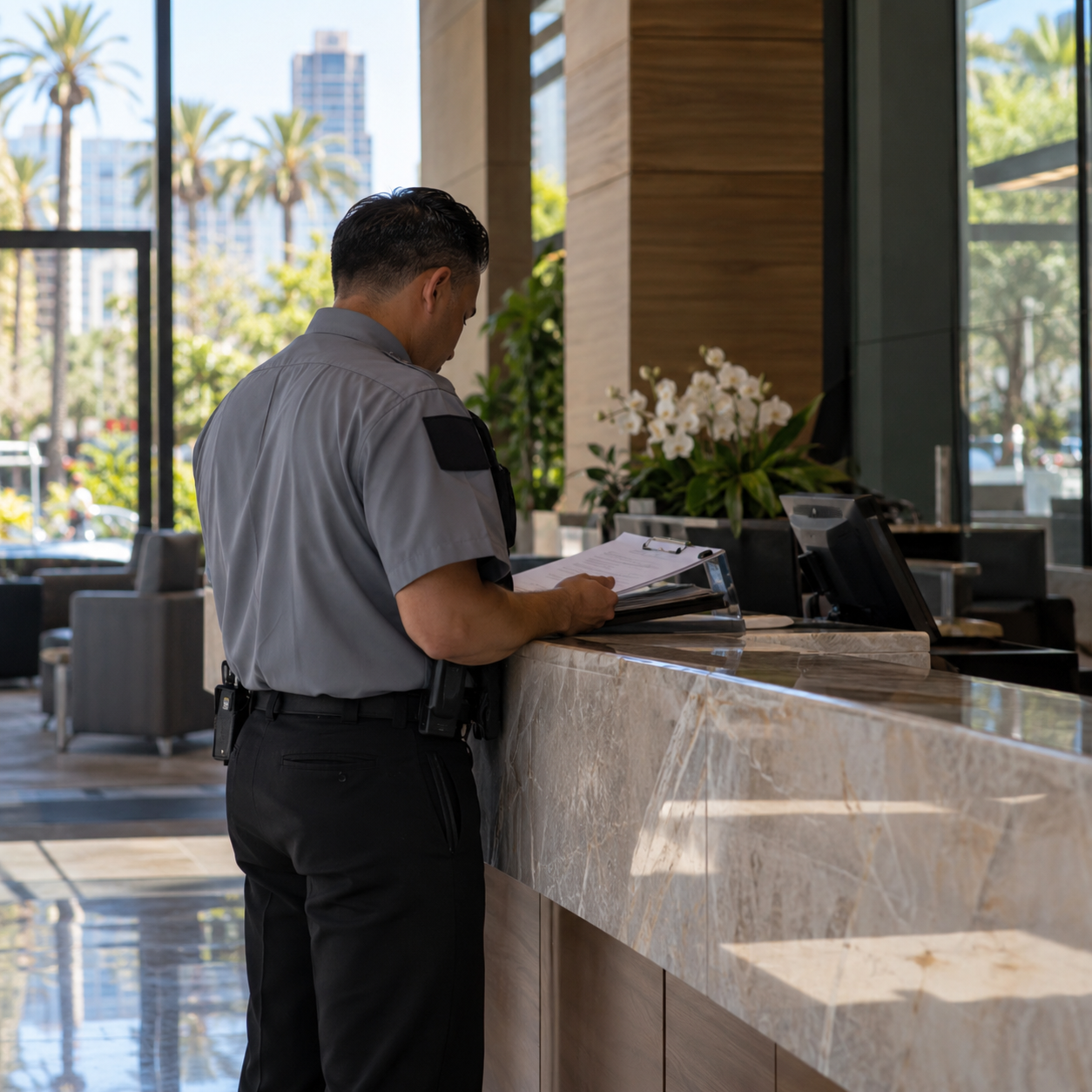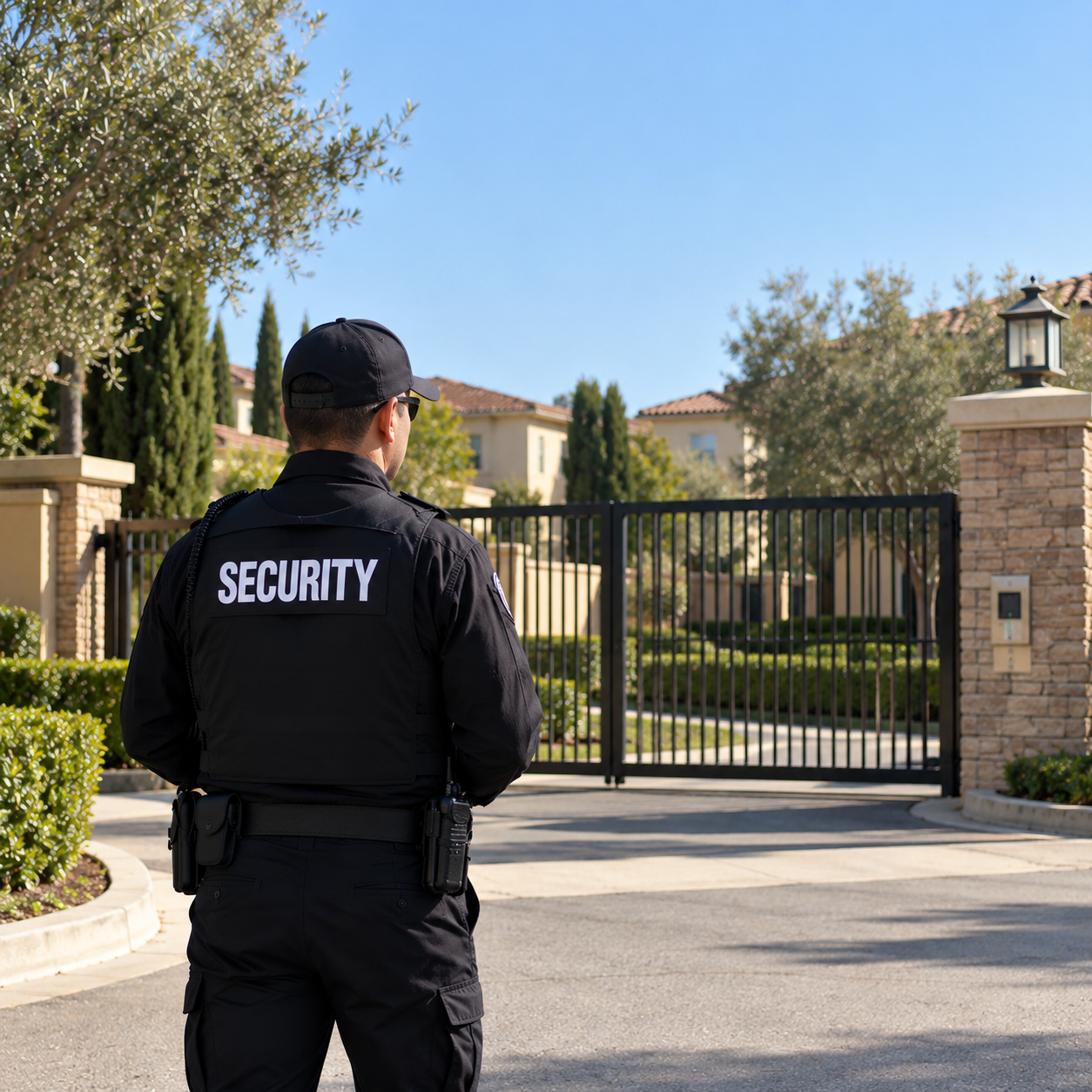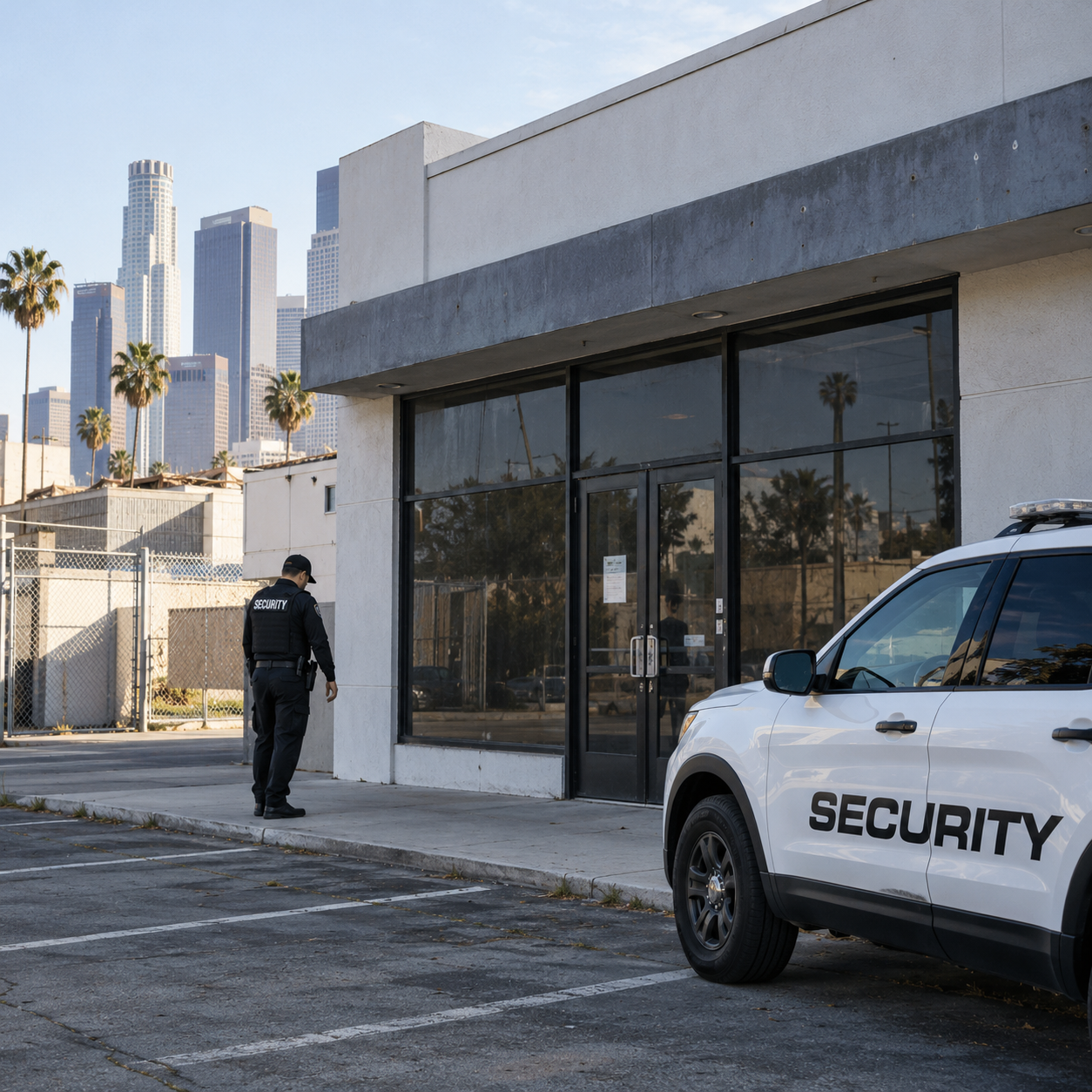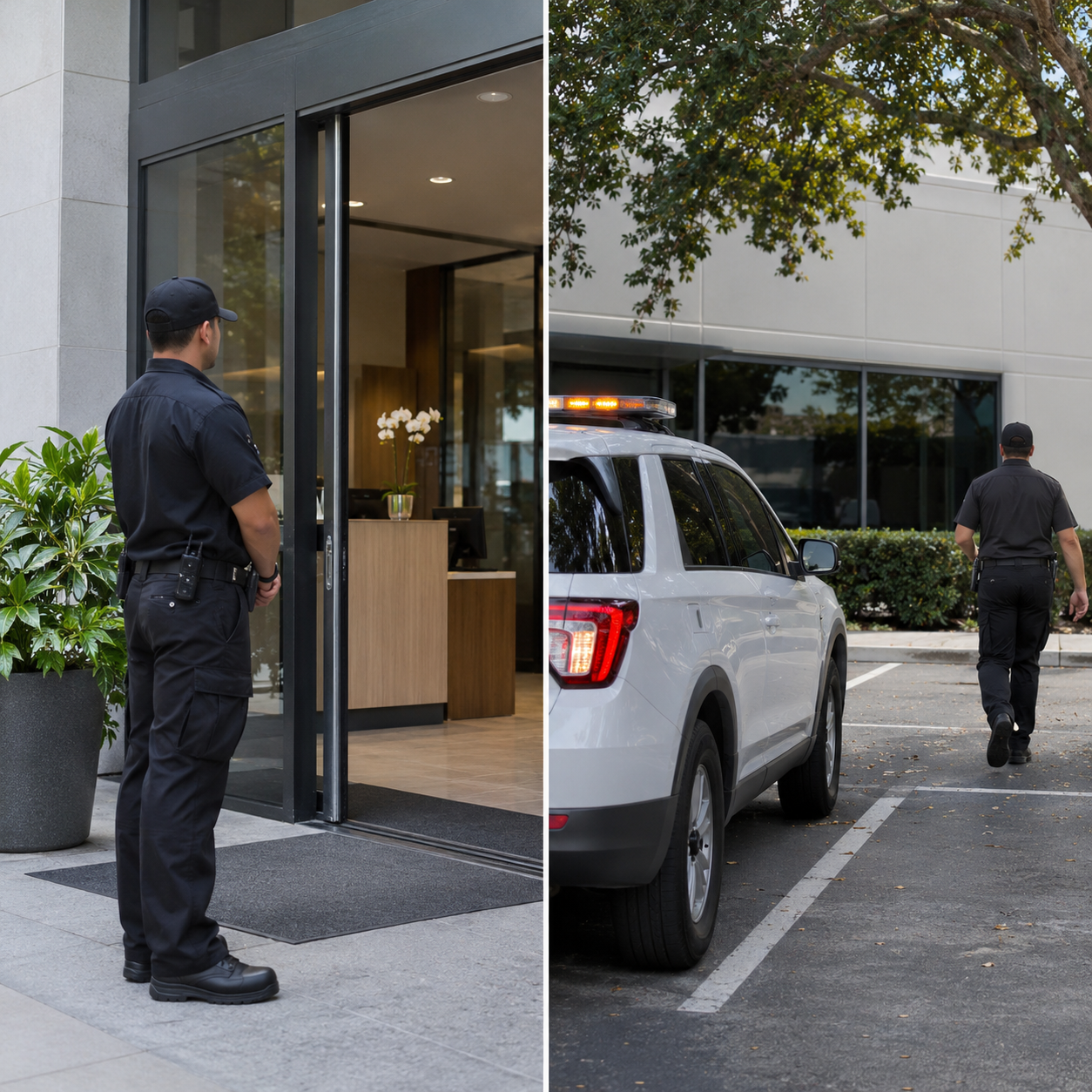
Security Guards vs Mobile Patrol Services is one of the most important decisions property managers face when balancing protection, operating costs, and daily access needs. A dedicated officer offers a consistent presence at a specific property, while mobile patrols provide recurring checks across larger areas or multiple locations. Neither is automatically better. The choice depends on risk, response needs, and tasks requiring continuous presence.
The Core Difference: Presence Versus Coverage
A standing security guard is assigned to a building, entrance, or property for a defined shift. Duties include visitor verification, incident response, and access control. Leaving a fixed post may require relief.
Mobile patrol officers move between designated checkpoints or properties, usually in a marked vehicle. Each visit can involve walking a perimeter, checking locks, inspecting parking areas, or responding to an alarm. Their presence is intermittent.
The operational takeaway: A standing guard protects a position throughout a shift; mobile patrol expands inspection coverage across places and times. Compare the tasks you need completed before comparing prices.
Security Guards vs Mobile Patrol: Side-by-Side Comparison
Factor
Dedicated security guards
Mobile patrol services
Presence
Continuous during assigned hours
Scheduled or variable visits
Strongest fit
Gatehouses, lobbies, busy entrances
Parking areas, HOAs, business parks
Response
On-site officer, subject to location and duties
Depends on unit location and dispatch
Access control
Ongoing visitor and credential checks
Periodic gate and door verification
Billing
Usually by staffed hour
Often per visit or patrol package
Reporting
Shift logs and incident reports
Checkpoint logs, inspection findings, incidents
The distinction matters especially after hours.
When Dedicated Security Guards Make More Sense
1) Your Property Needs Continuous Access Control
A corporate lobby cannot rely on an officer who visits three times overnight if every visitor must be checked. The same applies to an occupied gatehouse, a staffed loading entrance, or an active event checkpoint.
A dedicated officer verifies credentials, manages deliveries, and coordinates incidents without awaiting a patrol vehicle.
2) Public Interaction Is Part of the Job
Hotels, healthcare facilities, offices, and high-traffic retail centers often need security personnel who can answer questions and handle concerns professionally. Here, de-escalation matters alongside deterrence.
3) Conditions Demand Immediate On-Site Availability
Properties with recurring serious incidents, particularly sensitive assets, or complex visitor flows may justify a dedicated post. But a single officer cannot cover every corner; cameras and backup procedures may still be necessary.
When Mobile Patrol Services Are the Better Fit
1) Risk Is Spread Across a Large Footprint
An HOA with several parking lots, a business park with multiple buildings, or a storage facility with wide perimeter fencing may benefit from officers moving between targeted checkpoints.
Patrols should check gates, stairwells, lighting, and incident hotspots—not merely drive past.
2) You Need Coverage During Specific Windows
Many properties face increased concerns around closing, late-night deliveries, or early-morning hours. Scheduled and variable visits provide presence without a dedicated shift.
What a Verified Patrol Should Include
Purposeful checks: Doors, fences, parking rows, amenities, and identified hotspots.
Proof of service: Time-stamped checkpoints or inspection records.
Exception reporting: Photos of damage, unsecured entrances, or maintenance hazards.
Defined escalation: Clear instructions for management notification, dispatch, and emergencies.
3) Multiple Nearby Properties Share Similar Needs
For property portfolios, mobile patrol can distribute personnel across locations. Ask about route capacity, overlapping calls, and travel time.
Which Option Costs Less Over a Month?
Mobile patrol is commonly less expensive when the requirement is a limited number of inspections rather than continuous staffing. Dedicated security usually costs more because every assigned hour must be covered, including shift relief and scheduling requirements.
But a cheaper contract is not necessarily a better one. Compare what is actually purchased:
Number and duration of patrol visits versus dedicated coverage hours.
Included alarm responses and charges for additional callouts.
Foot checks, lockups, reports, and supervisor inspections.
Coverage during holidays, staffing changes, and emergencies.
If a gate must be actively controlled for eight hours, occasional patrol visits are not an equivalent substitute. Conversely, paying a full-time guard to inspect an empty parking lot periodically may not be the best allocation of funds.
Why a Hybrid Security Model Often Wins
For many properties, the strongest answer to Security Guards vs Mobile Patrol Services is a combination of both. A shopping center might use posted coverage during busy business hours, then move to mobile checks and monitored cameras overnight. A residential community might staff its main entrance while routing a patrol officer through garages and shared amenities.
CWPS also offers GuardShare, a shared-security model intended for neighboring properties that need more structured attention than occasional drive-bys but do not require a dedicated officer at every site. Confirm availability and response expectations in writing.
Licensing and Service Standards in California
Whether you choose a standing officer or mobile patrol, verify the provider’s licensing and personnel qualifications. California’s Bureau of Security and Investigative Services explains guard registration, background checks, and training requirements in its official Security Guard Registration guidance.
Property managers can read that guidance to understand the minimum regulatory foundation and use the state’s license lookup when evaluating vendors. Licensing is the baseline; supervision and reporting determine daily performance.
A Four-Step Plan for Choosing Coverage
Map your risks: Mark entrances, repeat incident locations, after-hours activity, and remote areas.
Separate permanent duties from periodic checks: Visitor screening may need a fixed post; perimeter inspection may not.
Test response arrangements: Clarify dispatch, backup coverage, alarm handling, and escalation thresholds.
Review results after 30 days: Compare incident patterns, verified patrols, response times, and unresolved property issues.
For deeper guidance on mobile routes and real-world applications, see our published guide to San Diego Mobile Patrol Security Services.
How CWPS Helps You Choose the Right Model
Established in 2012, City Wide Protection Services (CWPS) provides professional security personnel, courtesy patrols, mobile patrol coverage, camera and alarm monitoring, and security consultation. We help property owners consider access requirements, risk locations, monitoring needs, and reporting expectations when shaping their protection plan.
To compare security options for your property, contact our team:
Call: (888) 205-4242
Email: [email protected]
FAQ: Quick Answers for Property Managers
Can mobile patrol replace an on-site guard?
Sometimes, when periodic inspections are sufficient. It cannot replace continuous visitor screening or immediate on-site coverage where those are required.
Is mobile patrol always cheaper?
Not always. Costs depend on visit frequency, response arrangements, property size, and whether the patrol unit is shared or dedicated.
Can guards and mobile patrols work together?
Yes. Posted personnel can manage entrances while patrol teams inspect broader areas and respond to issues elsewhere on the property.