Property Management Security Solutions California owners and managers choose must address more than occasional trespassing or property damage. Managing residential communities, office buildings, retail centers, and mixed-use developments means balancing tenant safety, property protection, operating costs, and daily access requirements. A single security arrangement rarely works equally well across every property.
The most effective approach combines professional security personnel, mobile patrols, controlled access, camera monitoring, and clear incident reporting. When these elements work together, property managers can identify vulnerabilities earlier, coordinate responses more effectively, and make better decisions about their security budgets.
Why Property Managers Need a Different Security Approach
Property managers are responsible for environments that remain active long after regular business hours. Residents return late, contractors access maintenance areas, deliveries arrive unexpectedly, and shared facilities require ongoing supervision.
Common challenges include:
- Unauthorized access: Tailgating, unsecured entrances, and unauthorized visitors.
- Parking-related incidents: Vehicle break-ins, vandalism, and suspicious activity.
- Tenant complaints: Noise disturbances, trespassing, and common-area violations.
- Maintenance vulnerabilities: Broken lighting, malfunctioning gates, and damaged fencing.
- Multiple-property oversight: Different security needs, staffing arrangements, and reporting expectations.
The operational takeaway: Effective security management connects physical protection with everyday property operations, ensuring vulnerabilities are addressed rather than repeatedly documented.
Five Essential Layers of Property Management Security
1) Access Control That Fits Daily Operations
Controlling who enters a property is one of the most important elements of preventive security.
However, a residential community and a commercial office building require different access procedures.
Property managers should consider:
- Credential management: Issue, review, and deactivate access cards, codes, and permissions.
- Visitor procedures: Establish clear requirements for guests, contractors, and deliveries.
- Restricted areas: Protect mechanical rooms, storage spaces, and employee-only facilities.
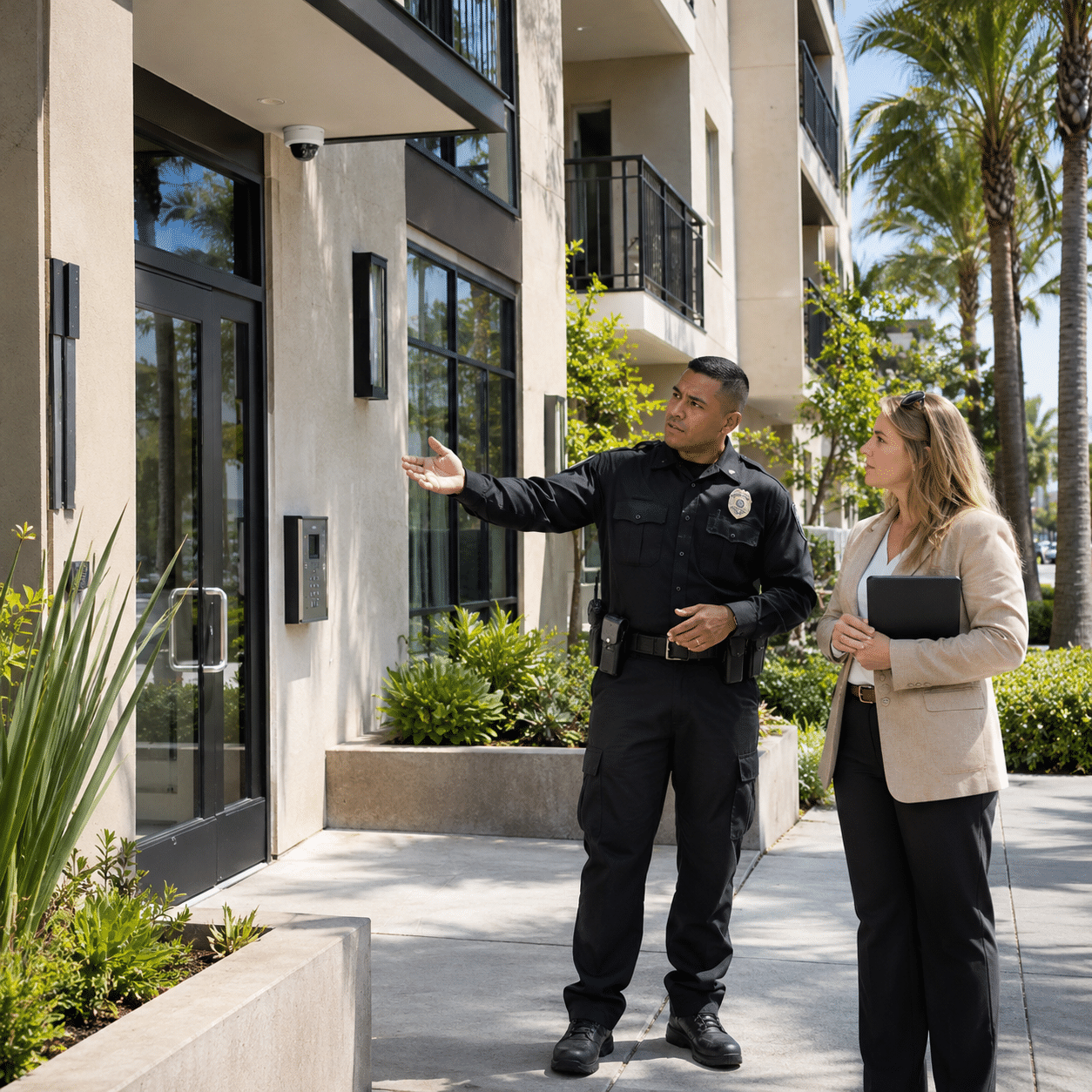
- Entrance inspections: Identify damaged locks, propped doors, and malfunctioning gates.
Don’t Overlook Secondary Access Points
A controlled main entrance offers limited protection when rear corridors, garage doors, or pedestrian gates remain unsecured.
Include these locations in routine inspections, while preserving required emergency exits and accessibility.
2) Security Guards and Mobile Patrol Coverage
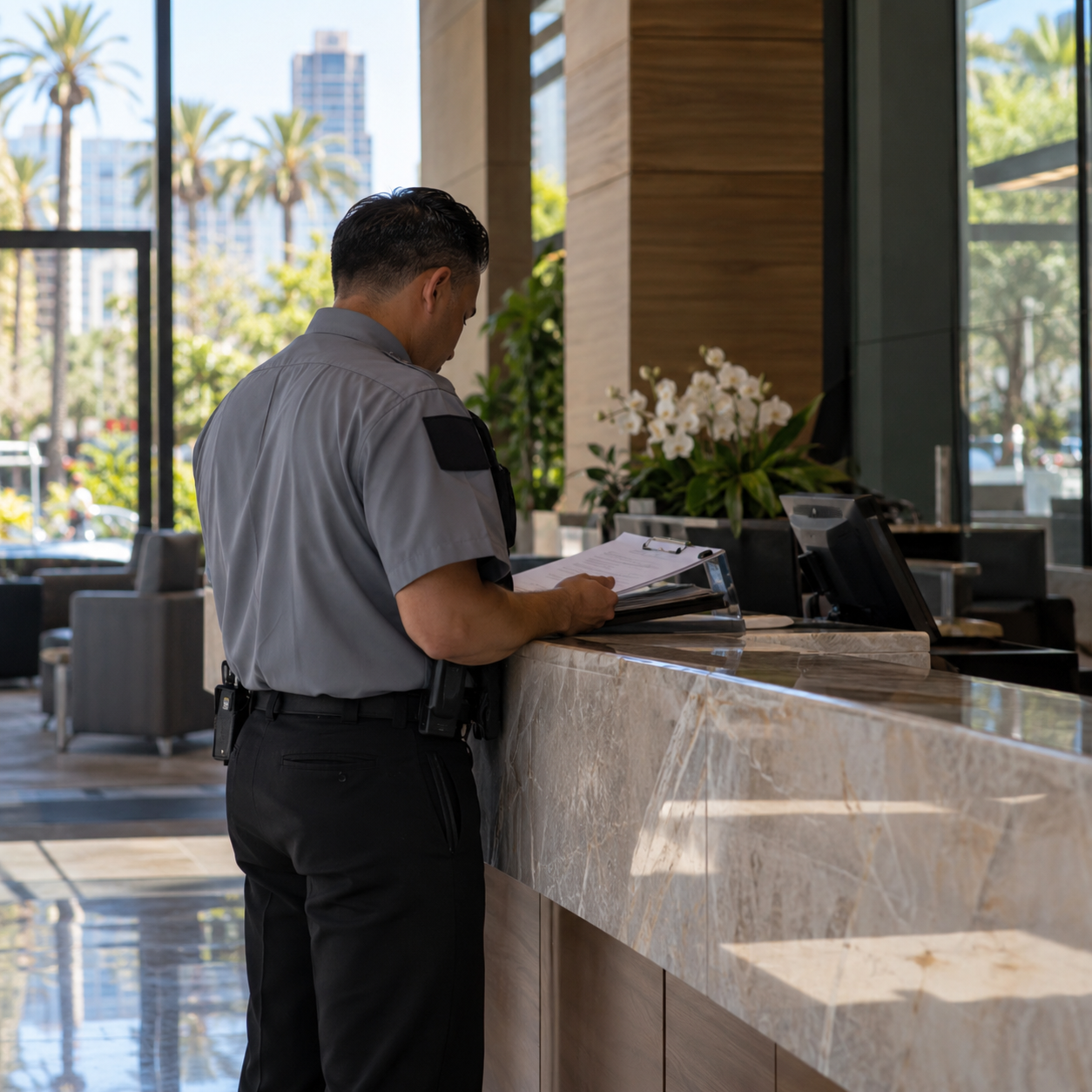
Professional security personnel provide visible deterrence, respond to property concerns, and help enforce authorized site procedures.
The right staffing model depends on the property’s layout and activity.
Dedicated security guards are particularly useful at:
- Residential lobbies and controlled entrances.
- Corporate reception areas.
- Busy commercial facilities.
- Locations requiring continuous visitor verification.
Mobile security patrols provide broader inspection coverage across parking areas, residential developments, business parks, and multiple buildings.
Effective patrol programs combine scheduled inspections with variable patrol times and documented checkpoints.
Rather than simply driving through a property, officers should verify door conditions, inspect vulnerable areas, and report issues requiring management attention.
3) Camera Monitoring With Coordinated Response
Security cameras can record incidents, but their preventive value increases when relevant alerts lead to timely action.
Modern monitoring systems may identify movement in restricted areas, unauthorized entry, or suspicious after-hours activity.
An effective response workflow includes:
- A camera or alarm identifies activity requiring attention.
- Monitoring personnel review the available information.
- Security receives the incident location and relevant details.
- Responders follow established escalation procedures.
- Management receives a documented incident summary.
Why integration matters: Cameras, alarms, and patrol personnel become more effective when information moves between them without unnecessary delays.
Monitoring procedures should respect privacy requirements and avoid delaying urgent emergency notifications.
4) Incident Reporting That Supports Management Decisions
Security reports should provide more than a record of completed patrols.
Property managers need information they can use to address vulnerabilities, evaluate staffing, and communicate with owners or HOA boards.
A useful incident report includes:
- Time, date, and exact location.
- Objective description of observed activity.
- Actions taken by security personnel.
- Supporting photographs or video references when appropriate.
- Notifications and recommended follow-up.
Turn Repeated Complaints Into Corrective Actions
If the same parking structure experiences repeated trespassing, review the underlying conditions before simply increasing patrol frequency.
The issue may involve broken access hardware, poor lighting, or an ineffective visitor procedure.
Monthly incident reviews help management identify these patterns and assign appropriate corrective actions.
5) Emergency Readiness and Clear Responsibilities
Security personnel, maintenance teams, and property managers must understand their responsibilities during emergencies.
A property-specific response plan should cover:
- Medical emergencies and calls for assistance.
- Fire alarms and evacuation coordination.
- Suspicious activity and security threats.
- Power outages affecting doors, gates, or cameras.
- Communication with emergency responders.
Clear post orders and emergency contact procedures reduce confusion when multiple teams become involved.
For a broader perspective, the Whole Building Design Guide’s Security for Building Occupants and Assets discusses layered physical security, access control, perimeter protection, and risk-based planning.
Property managers can read this resource to better understand how building design and operational security measures complement one another.
Security Requirements Across Different Property Types
Not every California property requires the same coverage.
| Property type | Primary security priorities |
|---|---|
| Apartment communities | Access control, parking patrols, resident concerns |
| HOAs and gated communities | Gate monitoring, courtesy patrols, amenity inspections |
| Office buildings | Lobby security, visitor verification, after-hours access |
| Shopping centers | Parking protection, tenant support, mobile response |
| Industrial properties | Perimeter security, equipment protection, controlled entry |
A property assessment helps determine whether dedicated officers, mobile patrols, remote monitoring, or a combination provides appropriate protection.
How to Control Security Costs Without Reducing Protection
Security spending should reflect actual property risks rather than relying on identical staffing schedules across an entire portfolio.
Property managers can improve efficiency by:
- Concentrating coverage during higher-risk hours.
- Using mobile patrols where continuous staffing is unnecessary.
- Connecting camera alerts with established response procedures.
- Repairing recurring physical vulnerabilities promptly.
- Comparing incident trends before changing staffing levels.
Shared-security arrangements may also suit nearby properties with compatible coverage requirements.
CWPS offers GuardShare, a shared-officer security model designed to provide structured coverage without requiring a full-time dedicated guard at every location.
Availability and coverage arrangements should be assessed for each property.
Security Performance Metrics Property Managers Should Track
A security program becomes easier to manage when performance is measured consistently.
Useful indicators include:
- Incident frequency: Changes in reported problems by property or location.
- Response time: Time between notification and officer arrival.
- Patrol verification: Completion of required inspection checkpoints.
- Repeat vulnerabilities: Unresolved gates, lighting failures, and access issues.
- Reporting quality: Timeliness and completeness of incident documentation.
These measurements support staffing decisions, maintenance priorities, and clearer communication with property owners.
For a deeper look at centralized monitoring and incident coordination, see our previously published article on Security Operations Center Services for Property Managers.
A 30-Day Property Security Improvement Plan
Week 1: Identify Vulnerabilities
Review incident records, property layouts, access points, lighting, and existing security coverage.
Week 2: Update Security Procedures
Establish patrol checkpoints, visitor requirements, emergency contacts, and reporting standards.
Week 3: Coordinate Personnel and Technology
Align security officers, mobile patrols, monitoring systems, and property management notifications.
Week 4: Review Performance
Evaluate response times, recurring incidents, incomplete patrols, and unresolved maintenance issues. Adjust coverage based on documented findings.
How CWPS Supports California Property Managers
Established in August 2012, City Wide Protection Services (CWPS) provides professional security services for residential, commercial, and industrial properties.
Our capabilities include armed and unarmed security personnel, courtesy patrols, mobile patrols, camera and alarm monitoring, access control solutions, and security consultation.
CWPS emphasizes customized protection, professional personnel, courteous service, and operational accountability.
For property managers overseeing multiple buildings or communities, these services can be combined according to each property’s security requirements.
Strengthen Your Property Security With CWPS
Choosing Property Management Security Solutions California property owners can rely on starts with understanding each building’s vulnerabilities, operational needs, and coverage priorities.
Whether you manage apartment communities, HOA properties, shopping centers, or commercial facilities, CWPS can help you evaluate suitable security staffing, patrol, and monitoring options.
Contact our team to discuss your property’s security requirements.
- Call: (888) 205-4242
- Email: [email protected]
FAQ: Quick Answers for Property Managers
What security services are most useful for property managers?
Access control, professional guards, mobile patrols, camera monitoring, and reliable incident reporting are common components of an effective property security program.
Can mobile patrols replace dedicated security guards?
Sometimes. Mobile patrols suit properties requiring periodic inspections, while dedicated guards are preferable when continuous on-site presence or visitor screening is necessary.
How can managers improve security across multiple properties?
Standardize reporting and emergency procedures while tailoring staffing, patrol schedules, and access controls to the risks at each location.