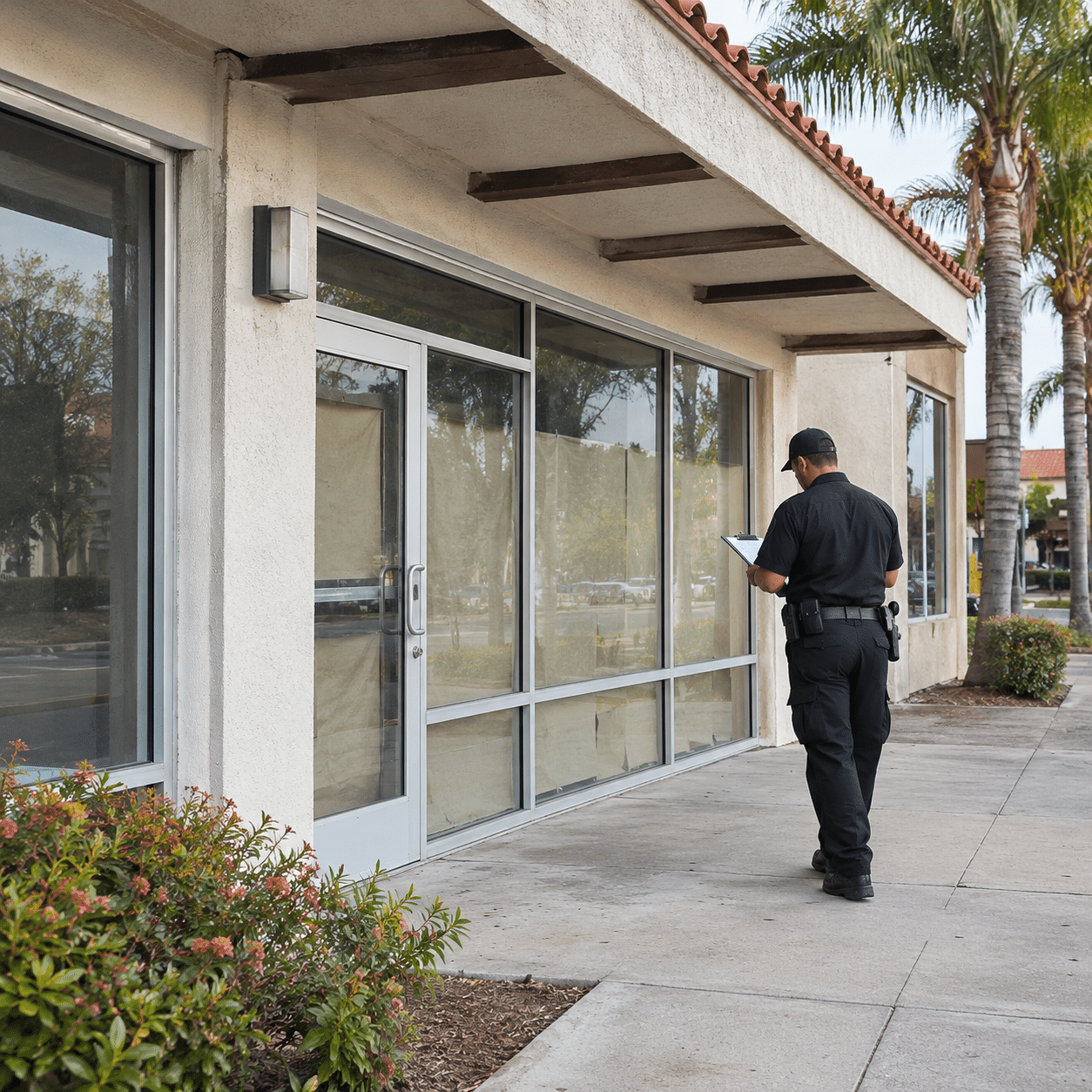
Security Guard Services for Vacant Buildings San Diego property owners need should begin before the first broken window or trespass complaint. An empty office, storefront, apartment building, or warehouse can remain unattended for weeks while utilities, equipment, and building systems are still valuable. The right security plan combines controlled access, purposeful inspections, monitoring, and clear escalation—protecting the asset without paying for coverage the site does not need.
Why Vacant Buildings Become Difficult to Manage
Once tenants leave, everyday supervision disappears. No receptionist notices an unfamiliar visitor, no employee flags a broken side door, and maintenance problems may sit undiscovered until the next scheduled visit.
Common exposure points include:
- Unauthorized entry: Unsecured windows, loading docks, or service doors become convenient access points.
- Materials theft: Electrical components, HVAC equipment, tools, and plumbing fixtures remain attractive targets.
- Property deterioration: Small leaks, broken lighting, and dumped debris can worsen between inspections.
- Liability and disruption: Trespassing or unsafe conditions can complicate repairs, showings, and future occupancy.
The operational takeaway: Vacant-property protection must make entry harder, identify changes quickly, and create an accountable process for fixing what officers discover.
The Five Layers of an Effective Vacant-Building Security Plan
1) Secure the Property During Tenant Turnover
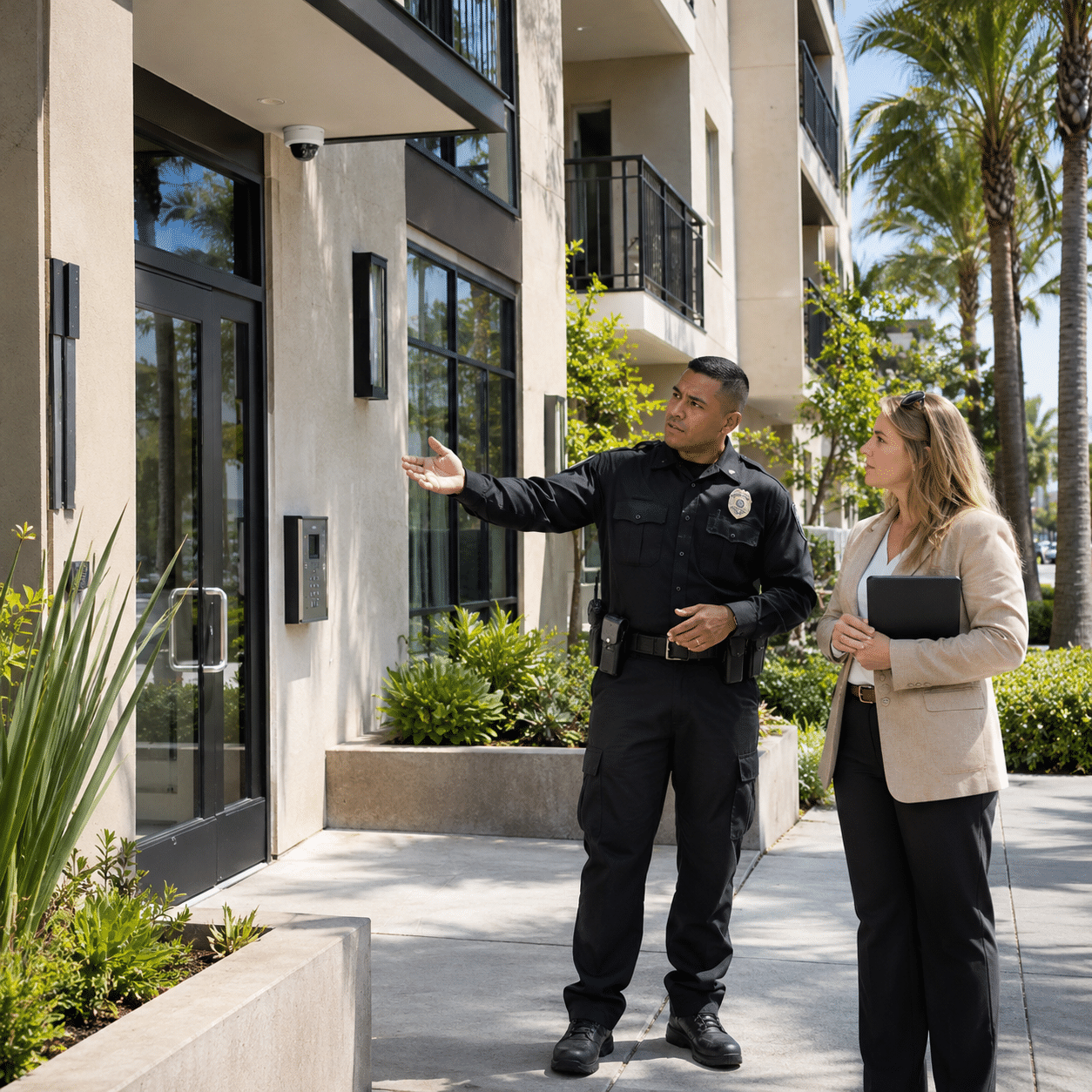
The vacancy period should begin with a documented handover, not simply handing back the keys. Revoke unused credentials, recover contractor passes, verify who has access to alarm panels, and confirm that doors and windows lock properly.
Check roof access, utility rooms, external storage, basement entrances, and garage doors. Record damaged openings for immediate repair and keep fire exits compliant with applicable safety rules.
The First Inspection Checklist
Photograph the building’s initial condition, note existing damage, map permitted entry points, and identify areas where patrol officers can safely inspect. A baseline prevents later disputes about when damage occurred.
2) Select Guards or Mobile Patrols Based on Risk
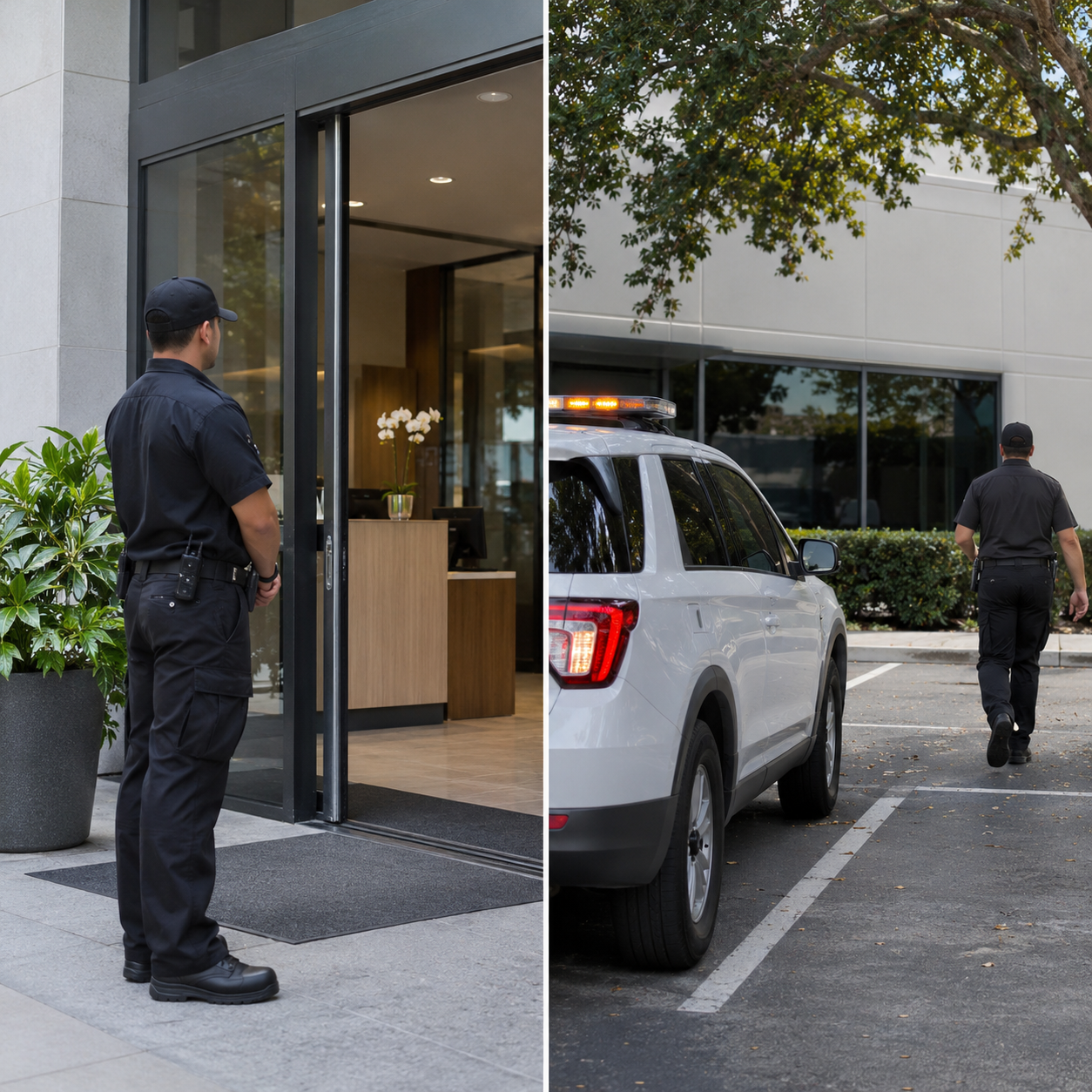
A dedicated officer may be appropriate for a building with repeated intrusions, active renovation work, or sensitive equipment awaiting removal. Standing coverage provides an on-site presence during assigned hours and allows controlled contractor entry.
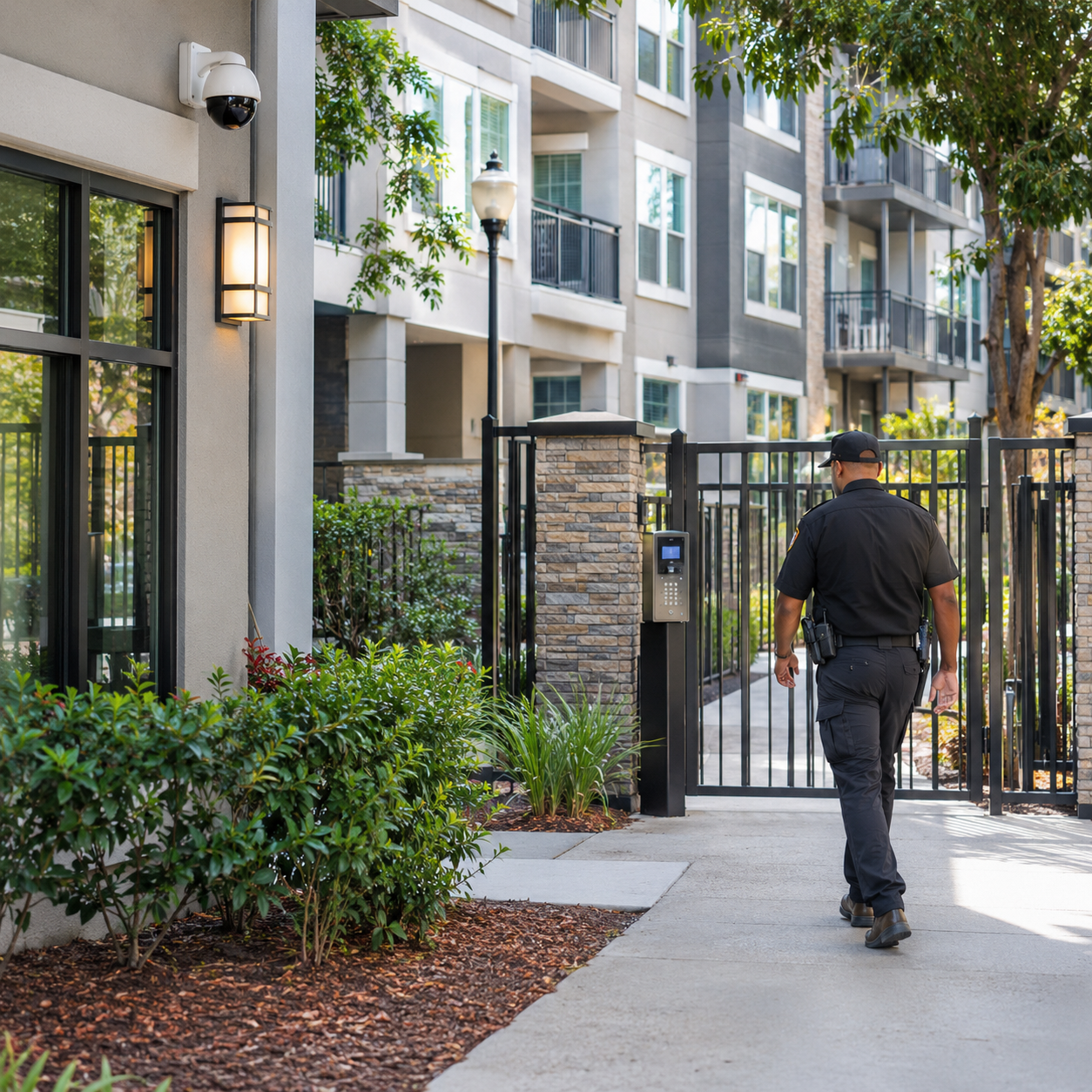
Mobile patrols are often more practical for secured properties that need periodic checks rather than a continuous post. Visits should include foot inspections of gates, doors, fence lines, and parking areas—not just a pass along the street.
Use an agreed set of checkpoints with some variable patrol timing. Set clear rules for when findings trigger a manager call, additional response, or emergency notification.
3) Link Camera Alerts to Physical Response
Remote cameras can cover entry points, loading docks, and vulnerable exterior areas. Detection zones for after-hours human movement or perimeter crossing can direct attention to unusual activity.
A practical workflow is:
- An alert identifies a location or access event.
- Monitoring personnel review available footage when appropriate.
- A patrol officer or designated contact receives the relevant details.
- The event is escalated according to site instructions.
- The incident is documented with time stamps and supporting evidence.
Video should supplement, not replace, physical security checks. Do not delay emergency calls when immediate danger is apparent.
4) Protect Equipment Without Creating New Hazards
Even an empty building can hold valuable copper, electrical panels, air-conditioning units, and fixtures. Patrol instructions should identify vulnerable rooms and exterior equipment, but guards should not open hazardous panels or enter unsafe structures to investigate damage.
Arrange qualified maintenance personnel for suspected leaks, exposed wiring, broken glass, or structural concerns. Security’s role is to identify and communicate the problem promptly.
5) Require Reports That Close the Loop
A useful vacant-building report specifies which areas were checked, what changed since the previous visit, and what requires follow-up. Request location-specific time stamps, photographs of damage where safe, actions taken, and the responsible management contact.
Track unresolved faults separately. A gate found unsecured for three consecutive nights is a repair priority, not three unrelated patrol observations.
San Diego Rules: Vacant Is Not Always Abandoned
San Diego’s Municipal Code distinguishes vacant structures from properties classified as abandoned under particular conditions. The City’s rules address nuisance conditions and securing buildings against unauthorized entry, while enforcement depends on the property’s status and circumstances.
For official context, review the City of San Diego Building & Land Use Enforcement guidance. It explains how code concerns are investigated and what remedies can follow qualifying violations.
These City rules do not automatically apply unchanged to every municipality or unincorporated area in San Diego County. Check with the relevant local authority when managing sites outside city limits.
Consider a Police Letter of Agency
The San Diego Police Department’s Letter of Agency program is specifically recommended for vacant properties, vacant lots, and locations affected by trespassing or nuisance activity. It allows police to act under an owner’s authorization in qualifying situations. The department also describes renewal and property-signage requirements.
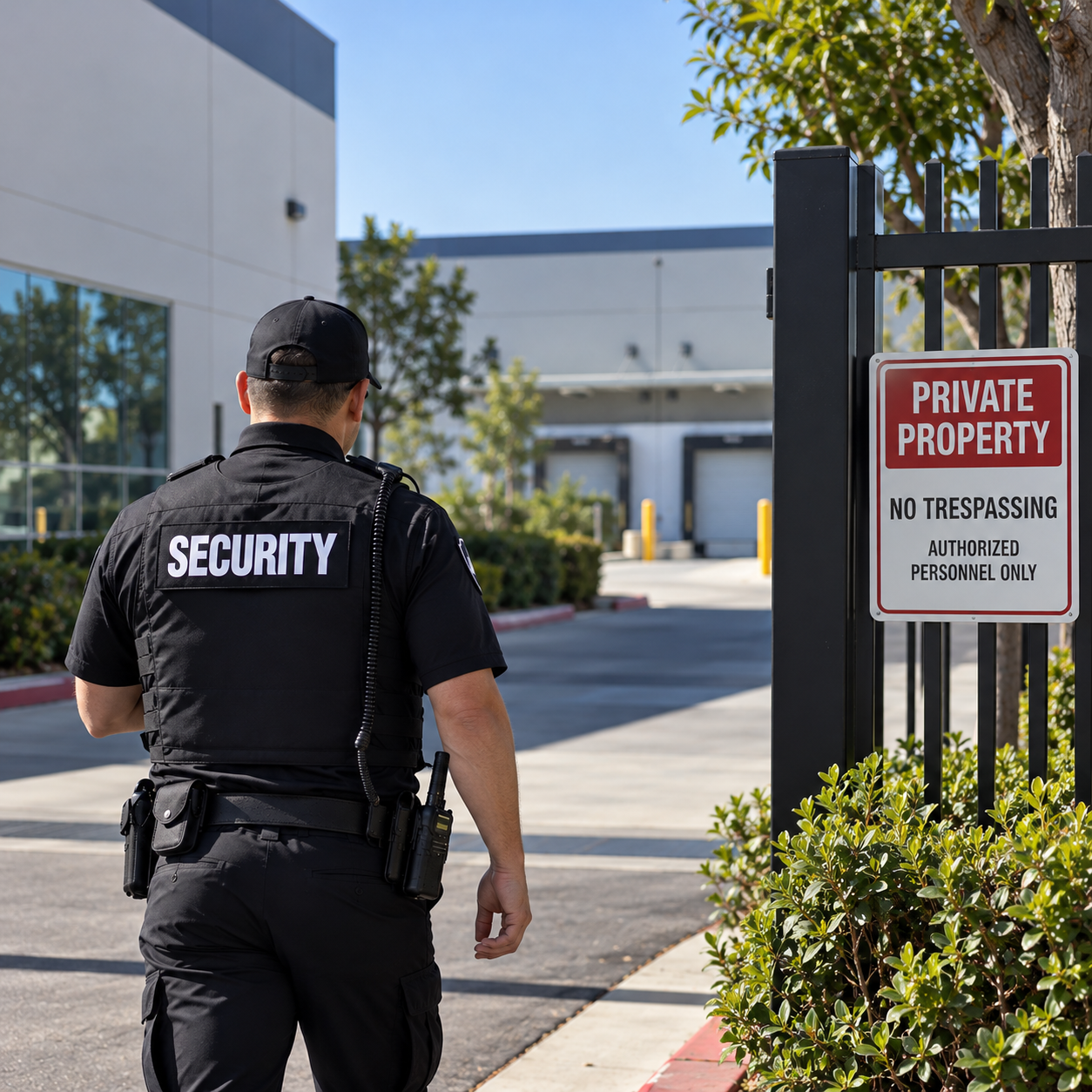
This is a valuable complement to patrol documentation, not permission for security guards to bypass lawful procedures. Serious incidents should be escalated to police, with personnel avoiding unsafe confrontation.
A 30-Day Implementation Roadmap
Week 1 — Secure and document: Complete the turnover inspection, repair exposed entry points, photograph conditions, and identify important assets.
Week 2 — Set post orders: Specify authorized visitors, patrol checkpoints, alarm contacts, reporting requirements, and response thresholds.
Week 3 — Test coverage: Start the agreed guard or patrol schedule, connect camera alerts where available, and verify coordination between security and maintenance.
Week 4 — Review: Check patrol completion, repeat trespass locations, unresolved repairs, and incident response. Adjust coverage as conditions change.
How CWPS Supports Vacant Property Protection
Established in 2012, City Wide Protection Services (CWPS) offers armed and unarmed guards, courtesy and mobile patrols, camera and alarm monitoring, and security consultation. Those capabilities can be combined for commercial buildings awaiting tenants, industrial facilities between users, and properties undergoing renovation.
For related guidance, our article on San Diego Mobile Patrol Security Services explains how visible patrols, verified checks, and incident reporting can support properties without permanent staffing.
Discuss Security Coverage for Your Vacant Building
The right Security Guard Services for Vacant Buildings San Diego plan should protect the building’s condition, support future occupancy, and give owners reliable updates while the site is empty.
CWPS can discuss security staffing, mobile inspections, and monitoring options based on your property’s layout and risks.
- Call: (888) 205-4242
- Email: [email protected]
FAQ: Quick Answers for Property Managers
Do vacant buildings always need a full-time guard?
No. A secured, lower-risk site may be suitable for scheduled mobile patrols and monitoring, while repeated intrusions or ongoing construction can justify dedicated coverage.
Can guards remove people from a vacant property?
Guards must stay within their legal authority and post orders. Threatening or dangerous situations should be referred to law enforcement.
What should every vacant-building inspection include?
Entry points, perimeter conditions, visible damage, lighting, accessible equipment areas, and a documented record of exceptions and follow-up.