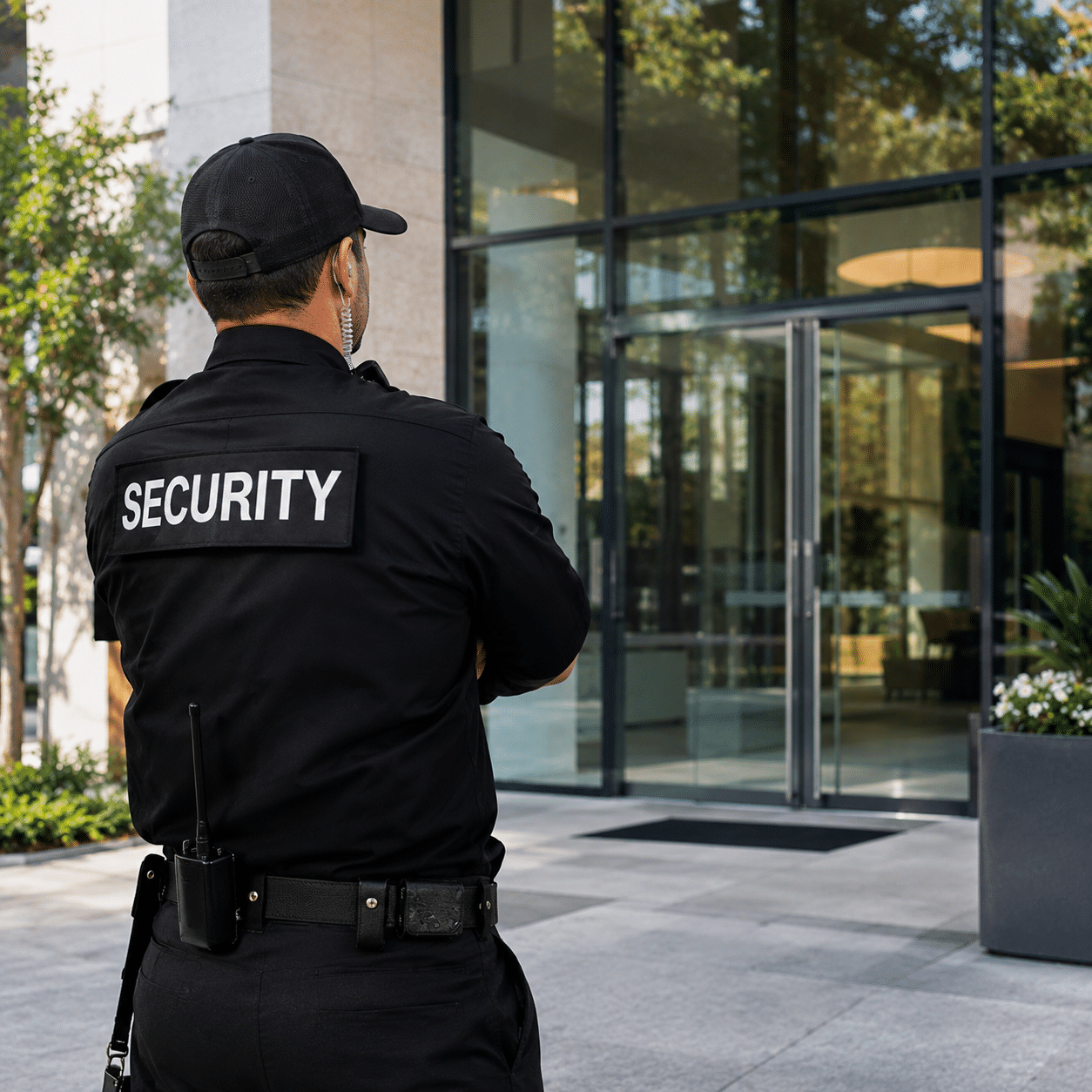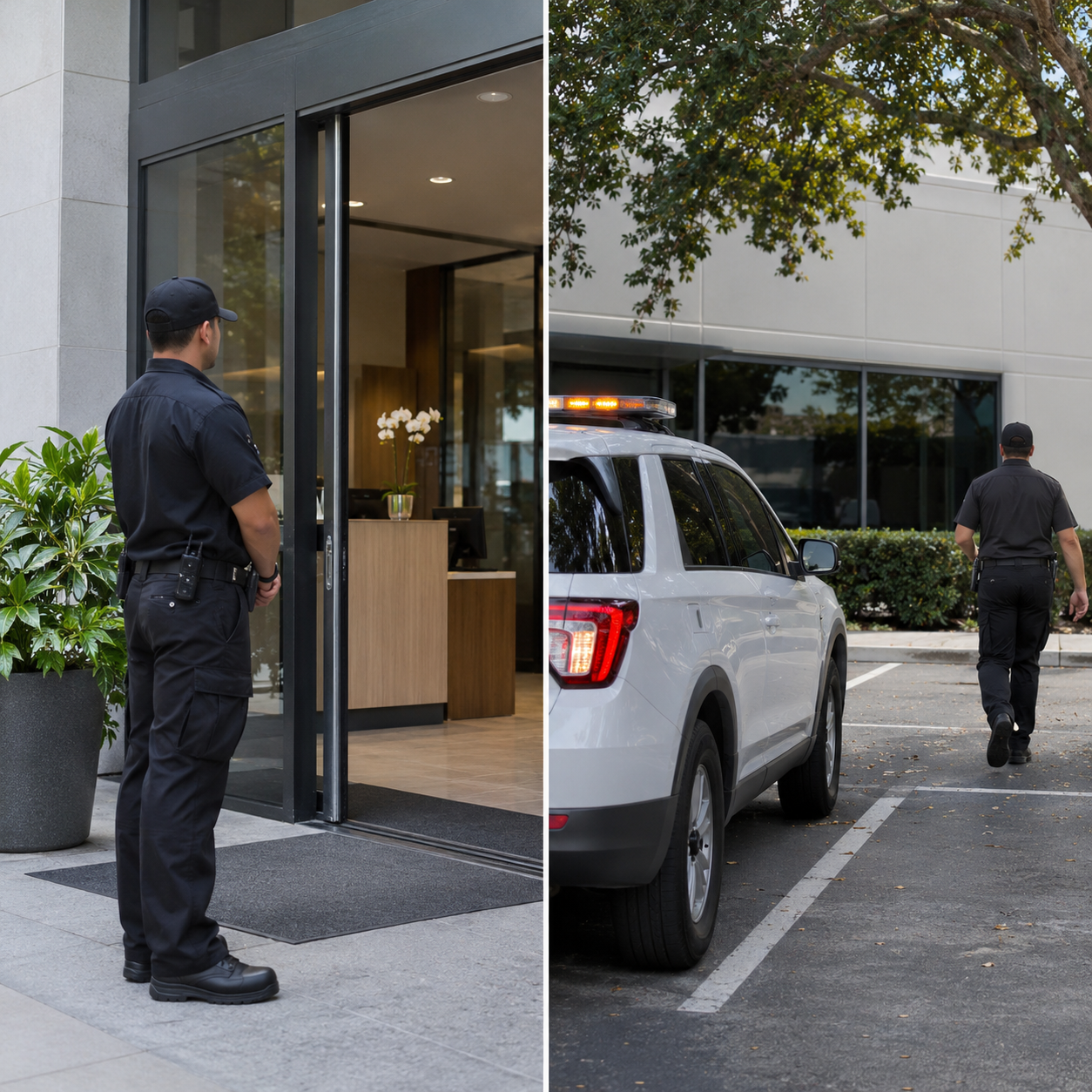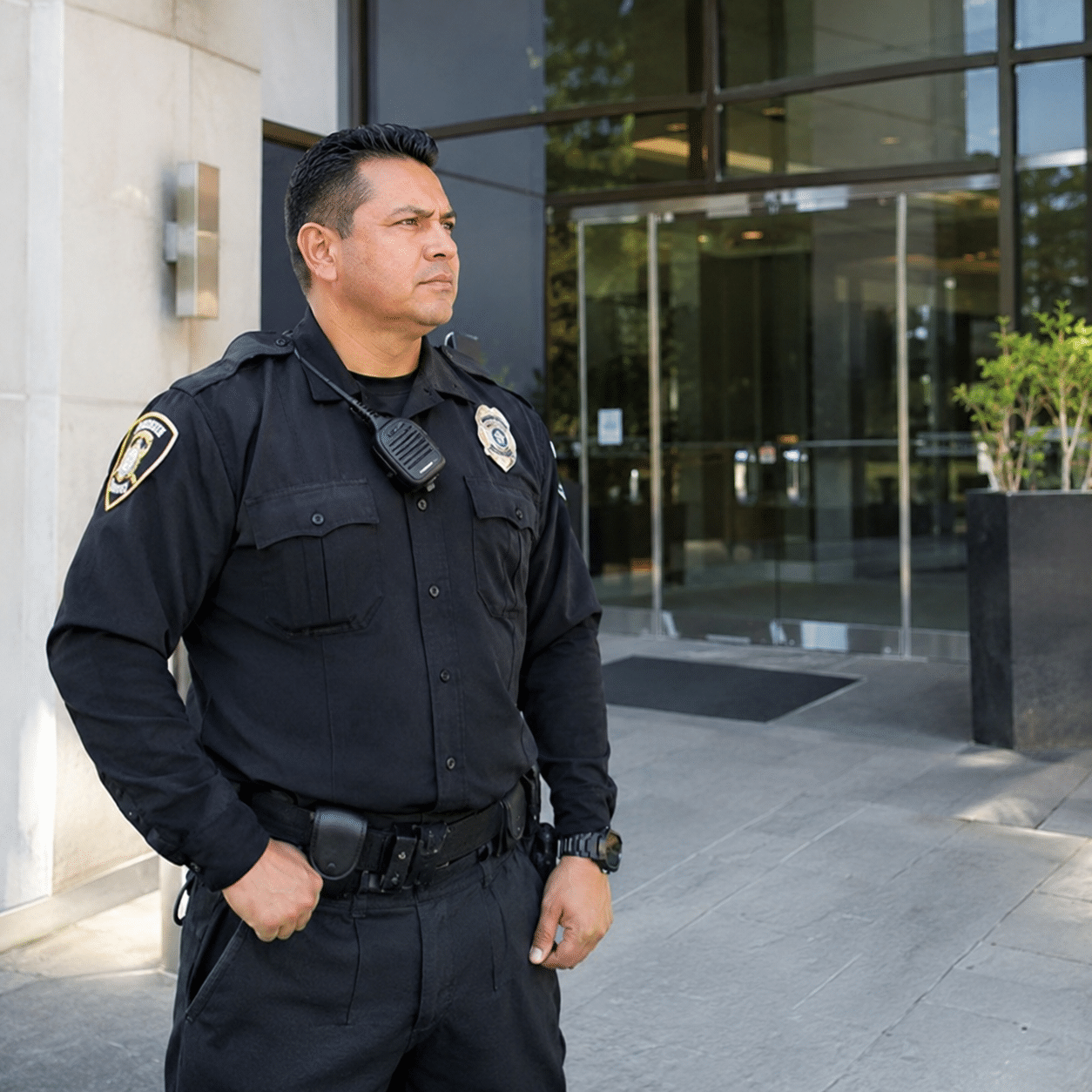
Unarmed Security Guard Services San Diego property managers choose should accomplish two things at once: discourage avoidable incidents and make customers, employees, and residents feel comfortable. A guard who can greet visitors, notice a broken access door, defuse a disagreement, and produce a clear report provides value long before an emergency occurs. For many San Diego properties, that combination of presence and service is more appropriate than armed coverage.
Why Unarmed Guards Fit Everyday Property Risks
Most security calls do not begin as violent emergencies. They involve an unauthorized visitor, a delivery at the wrong door, a recurring noise complaint, or uncertainty about who should access a restricted area. These situations need a composed professional with clear instructions—not an unnecessarily confrontational response.
Unarmed officers can help with:
- Visible deterrence: A recognizable uniform and consistent presence reinforce property rules.
- Access accountability: Visitor logs, credential checks, and observation of unusual entry patterns.
- Service and communication: Directions, assistance, and prompt notification to management.
- Early hazard detection: Reporting damaged locks, blocked exits, leaks, or inadequate lighting.
The operational takeaway: An unarmed guard’s effectiveness depends less on simply standing at a post and more on what the officer verifies, communicates, and documents during each shift.
Five Duties That Make Unarmed Coverage Worthwhile
1) Manage Entrances Without Creating Bottlenecks
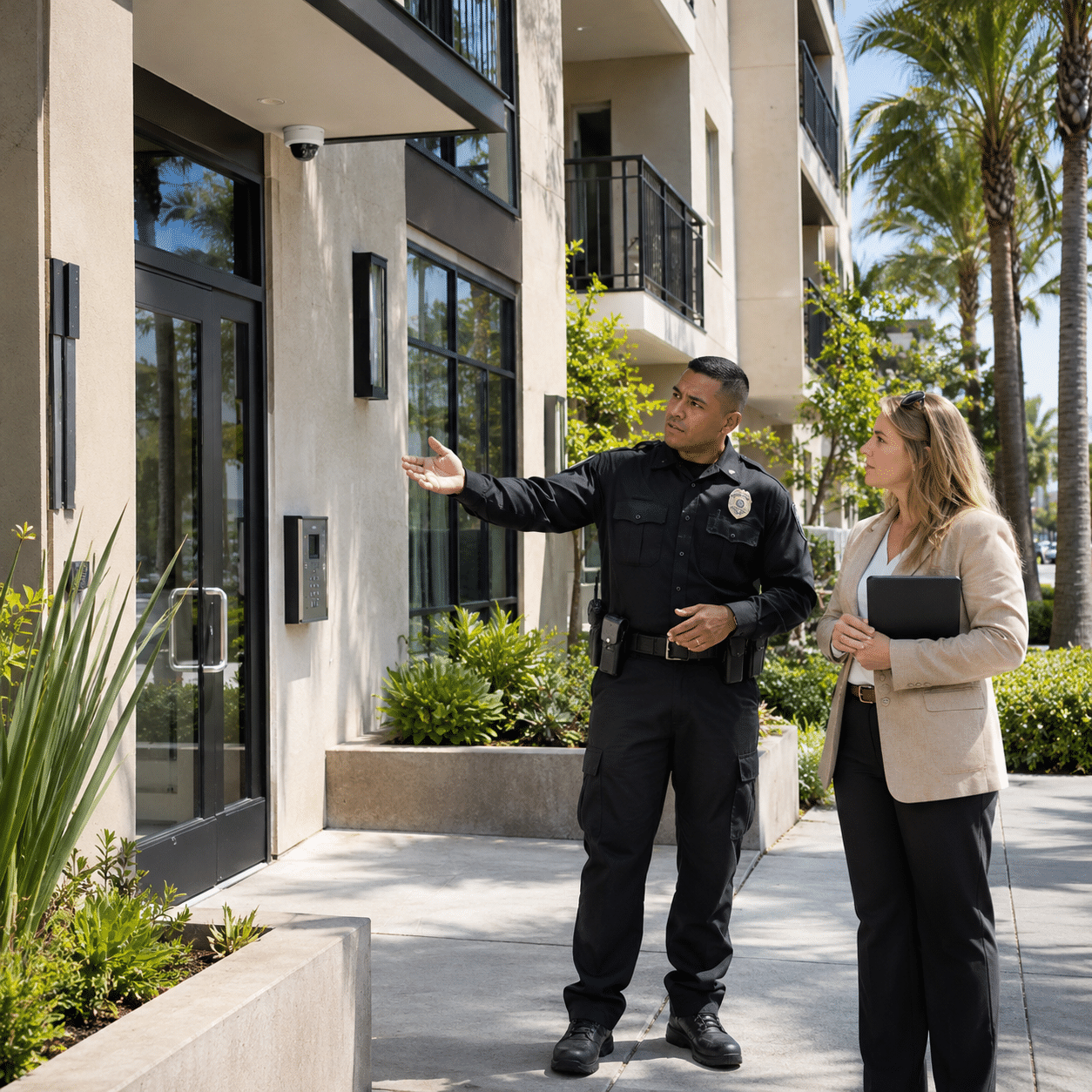
Office lobbies, apartment buildings, and business parks need access procedures that are consistent but workable. Officers can confirm visitor authorization, direct contractors to approved areas, and record exceptions without unnecessarily delaying residents or customers.
Start With a Clear Visitor Rule
Specify which entrances are public, which require credentials, who authorizes after-hours entry, and what happens when someone’s status cannot be confirmed. An officer cannot enforce a rule that management has never defined.
2) Patrol the Areas Cameras May Miss
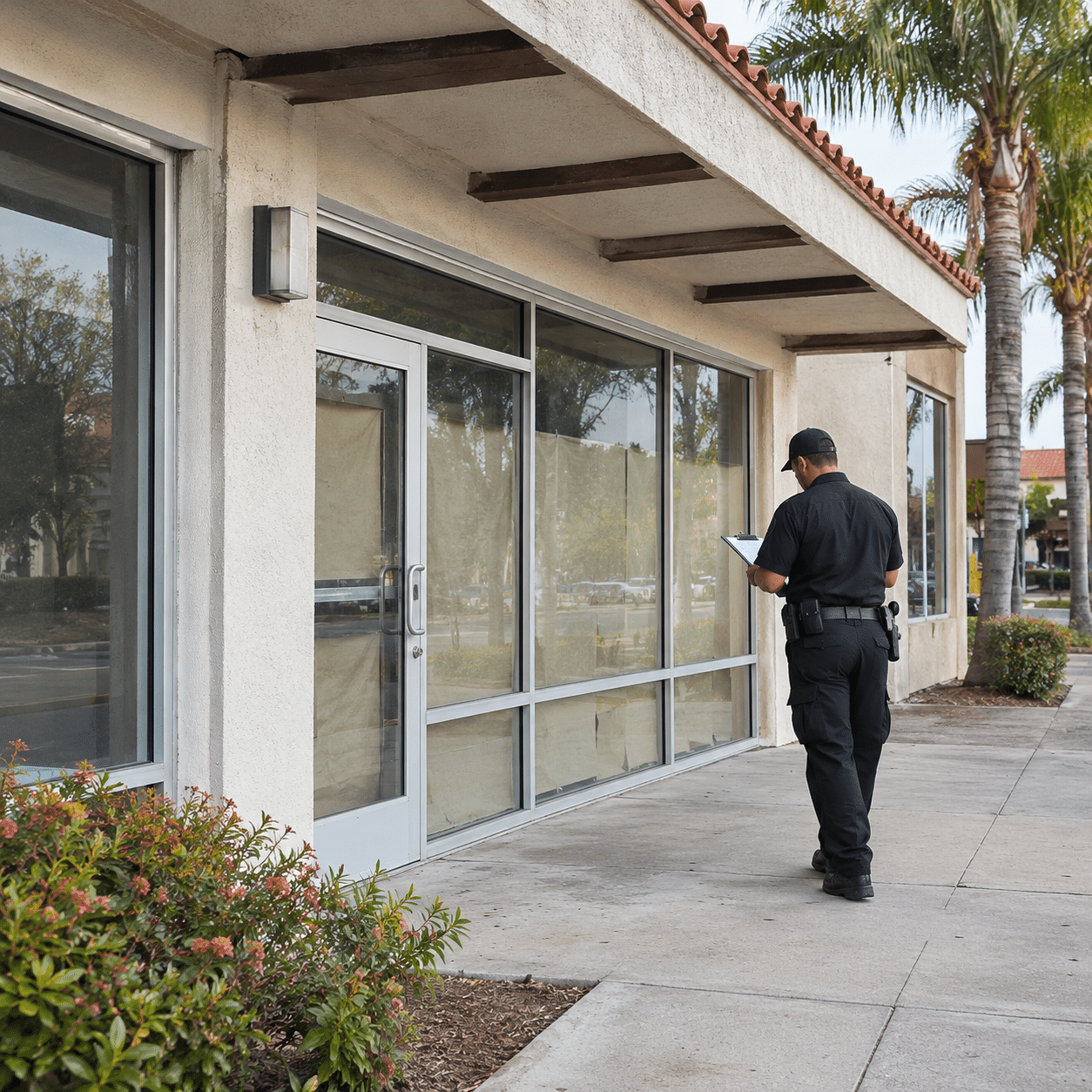
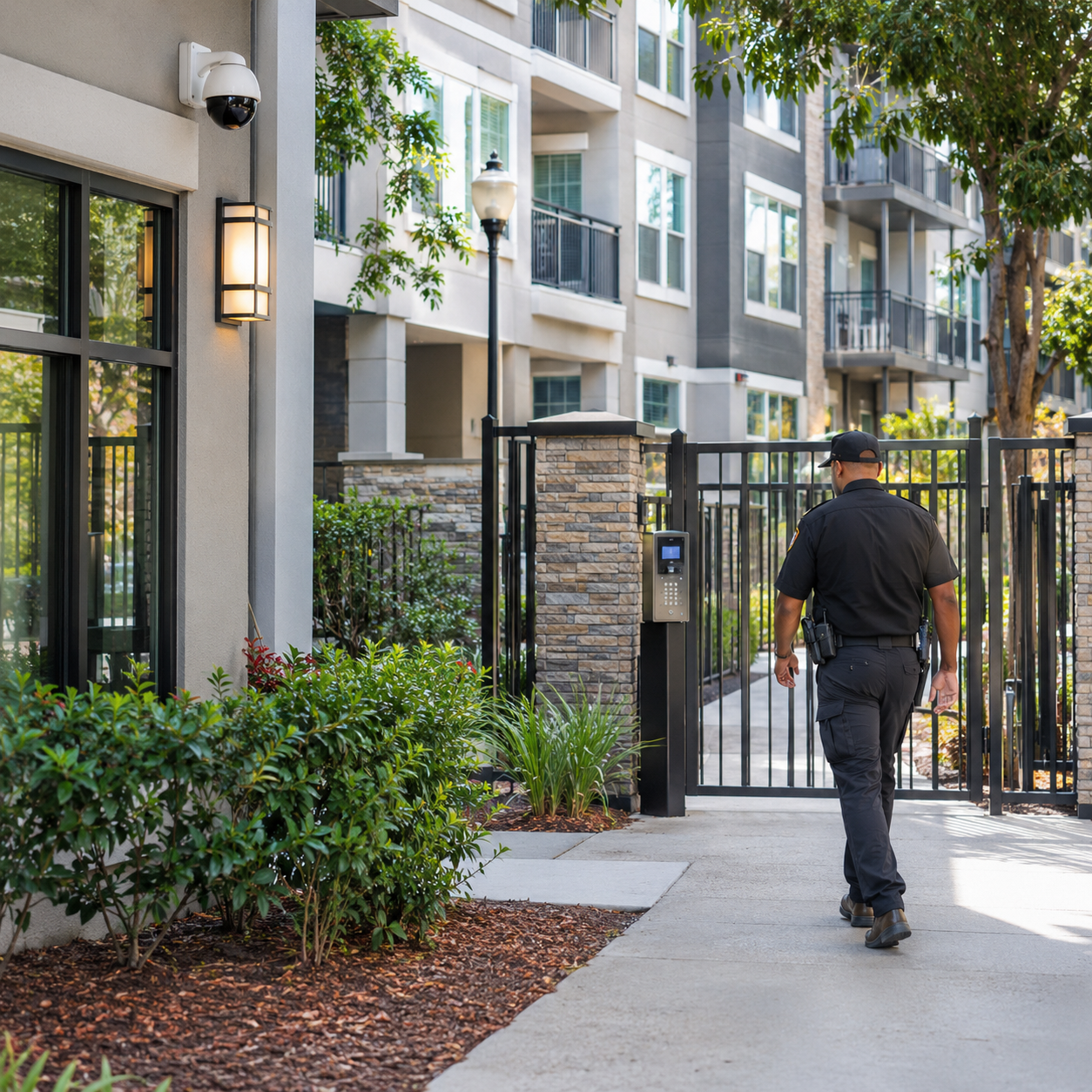
A security camera might show a garage entrance but not reveal whether a side door fully latched. Assigned foot patrols can verify stairwells, common rooms, fence lines, parking rows, and service corridors. Officers should log damage and refer maintenance concerns to the proper contact.
Patrol routes should include fixed essential checks and additional attention to recent problem spots. A checklist is more useful than a vague instruction to “walk the property.”
3) Handle Disturbances With De-escalation
Disputes over parking, access, or property rules require judgment. An officer should listen, communicate expectations calmly, maintain appropriate distance, and call for assistance when safety or authority limits require it. Unarmed security does not mean unprepared security, but guards are not substitutes for police or emergency responders.
4) Support Alarms and Incident Coordination
When an alarm activates or a resident reports suspicious activity, an officer can assess conditions from a safe location, notify dispatch or management, and coordinate with responding personnel. If live monitoring is available, camera information may help direct attention to the relevant entrance or zone.
What matters most: The post orders should define who receives alerts, who calls emergency services, and how shifts maintain communication during an incident.
5) Produce Reports Managers Can Act On
A useful report records the exact place and time, observed behavior, actions taken, notifications made, and unresolved follow-up. Photos may support reports of broken gates, vandalism, or maintenance hazards where appropriate. Objective details protect management from relying on memory or contradictory accounts.
Where Unarmed Security Works Best in San Diego
Multifamily communities: Lobby assistance, guest procedures, amenity checks, and respectful handling of resident concerns.
Office and corporate properties: Reception-area coverage, contractor check-in, after-hours access, and interior walkthroughs.
Retail and mixed-use sites: Customer-facing presence, tenant calls, common-area observations, and parking-lot inspections.
Healthcare-adjacent facilities: Visitor guidance, access rules, and calm coordination with facility staff, without interfering with clinical responsibilities.
A higher-risk site may need additional measures. The choice between unarmed, semi-armed, or armed coverage should follow a documented assessment of threats, expected duties, and the environment—not assumptions about what looks more secure.
California Licensing and Training: What to Check
California’s Bureau of Security and Investigative Services (BSIS) regulates security guard registration. Its official guidance covers background screening, Power to Arrest and Appropriate Use of Force training, additional skills training, and ongoing training requirements.
For the current requirements, read the BSIS Security Guard Registration fact sheet. Property managers can use it to understand what registration means and what to verify before contracting with a security company.
A guard card alone does not establish that an officer understands your property’s layout. Ask how the provider trains personnel on post orders, de-escalation, reporting standards, and site-specific escalation procedures.
Standing Guard, Mobile Patrol, or Both?
An unarmed standing officer is appropriate when a lobby, gate, or other location requires attention throughout an assigned shift. A mobile officer covers a larger footprint through scheduled vehicle and foot inspections, but cannot remain at every location continuously.
For example, an apartment community might use a standing officer during evening visitor traffic and mobile patrol checks of parking areas overnight. Another building may rely on a single lobby post supported by camera monitoring and a separate response arrangement.
Compare contracts based on hours of dedicated presence, actual inspection tasks, call handling, relief coverage, and reporting, not only the hourly rate. Clear coverage limits prevent unrealistic response expectations.
A Practical 30-Day Deployment Plan
- Week 1 — Assess: Map entrances, incident locations, after-hours activity, and vulnerable shared spaces.
- Week 2 — Define: Write visitor procedures, patrol checkpoints, incident thresholds, and management contacts.
- Week 3 — Test: Review alarm notifications, shift handoffs, report quality, and actual patrol completion.
- Week 4 — Improve: Examine repeat complaints and maintenance issues, then adjust assignments and post orders.
How CWPS Approaches Unarmed Security
Established in 2012, City Wide Protection Services (CWPS) offers armed, semi-armed, and unarmed security services, alongside courtesy patrols, mobile patrols, and camera and alarm monitoring. CWPS emphasizes professional presentation, courteous interactions, and continued training through its security training academy.
For related planning advice, see our previously published guide to San Diego Security Guard Services, which discusses guard roles across business and community settings.
Discuss Unarmed Coverage With CWPS
The right Unarmed Security Guard Services San Diego plan should make access routines easier to manage, identify vulnerabilities sooner, and leave owners with useful documentation. CWPS can discuss a staffing and patrol arrangement suited to your property’s layout, operating hours, and risk profile.
- Call: (888) 205-4242
- Email: [email protected]
FAQ: Quick Answers for Property Managers
Can unarmed guards respond to security incidents?
Yes. They can observe, communicate, document, de-escalate, and seek appropriate assistance within their training and lawful authority. Serious threats require emergency responders.
Are unarmed guards suitable for apartment communities?
Often. They can support visitor access, patrol common spaces, and communicate resident concerns. The coverage model should match the property’s actual risks.
Do unarmed guards replace security cameras?
No. Cameras help detect and document activity; officers provide on-site observation, human judgment, and communication. They are most useful when coordinated through clear procedures.